Worldwide Customer Service & Service Center Network
Dassault Aviation
I don’t want to make light of a serious medical situation, but this month’s column is literally heart-stopping.
It’s about the longest ECMO air transfer ever accomplished. An ECMO machine is a heart/lung bypass device. You won’t find one in every hospital. If you see one in an intensive care unit, it’s usually big and bulky.
Only a few are miniaturized, ruggedized, and certified for flight. A patient being cared for with an ECMO unit must be sedated and constantly monitored by a cardiac team. The flight crew must exercise special care and ensure continuous power to onboard equipment, especially during ground stops.
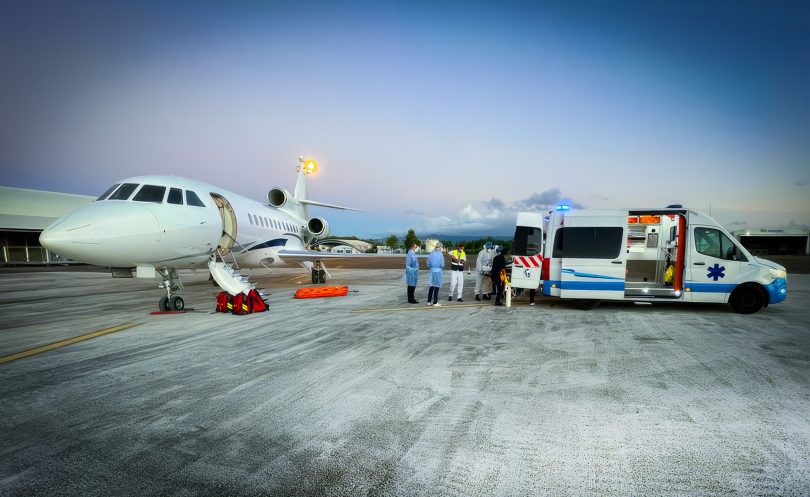
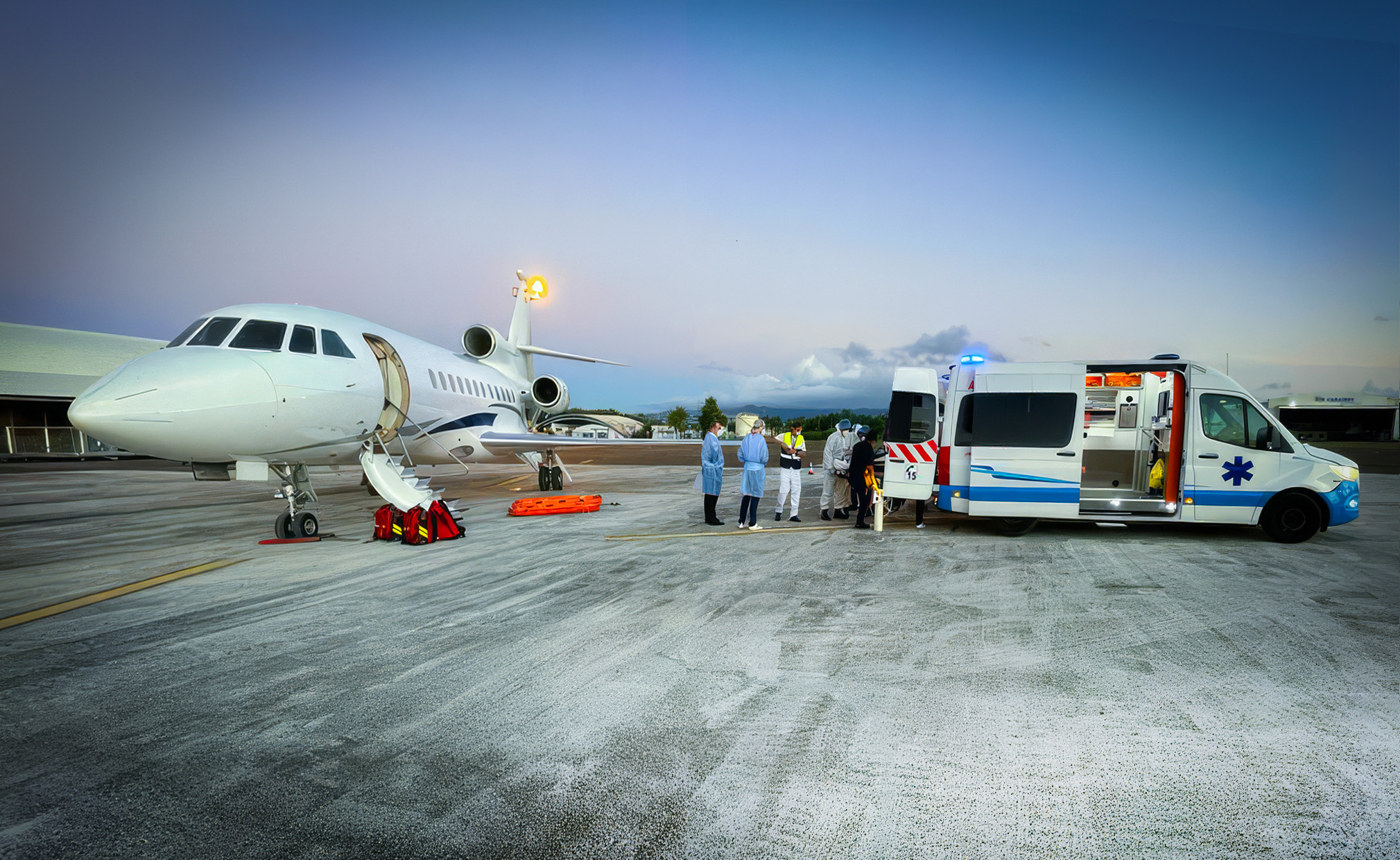
This world-circling mission was flown by a Falcon 900EX operated by Bordeaux-based Airlec, a unit of Dexfly. Managing Director Paul Tiba flew part of the mission. He recently presented the flight as a case study to the European Business Aviation Association, where he is a board member.
Last summer, the 900EX, a flying intensive care unit, was approaching San Antonio with a patient en route from Stuttgart when the crew accepted a mission to fly a 17-year-old girl in Nouméa, New Caledonia, with terminal cardiac failure. Given Nouméa’s limited cardiac capabilities, she had about 72 hours to survive.
In San Antonio, the aircraft was quickly readied for dispatch to New Caledonia via Honolulu but was still missing a few items. In Paris, a surgical team hopped on an airline flight with a portable ECMO machine.
The aviation and medical teams met in New Caledonia about 24 hours later. The medical team connected the patient to the ECMO machine and waited 12 hours to ensure she was stable and ready to fly.
Then the 900EX made the return flight to Paris with stops in Jakarta and Muscat, Oman, with two flight crews on continuous duty for a combined 27 hours. In Paris, the patient received a new heart at the Pitié-Salpêtrière Hospital. Today, she is at home in New Caledonia with a new lease on life.
I was proud that Dassault had some involvement, in the form of a 27-year-old, well-maintained 900-series jet. This particular Falcon contributed to fly 675 Covid patients, more than any operator to Paul’s knowledge. It was the only aircraft in Europe to fly Ebola patients during a 2015 outbreak, and Paul chose to fly every mission himself.
He tells me he has excellent support from Dassault, including from our Command Center and our Dassault MRO network. He’s had one AOG on a medevac flight. It occurred before departing Bordeaux due to a dead battery. This was resolved by DFS installing a new one within 90 minutes. Admittedly, it doesn’t hurt to have a maintenance issue next to the factory. Otherwise, he hasn’t had an AOG in five years and 4,000 hours.
Paul gives his highest commendation to technical representatives Jeremie Dalibon in Bordeaux and Nicolas Jorry at Le Bourget for their unfailing assistance.
Airlec’s 900EX had been an unsung hero throughout its career. That is, until this year. You may have been one of the five million viewers who saw it on social media when it carried Lindsey Vonn home to Colorado after shattering her leg on a downhill Olympic run in Cortina. Through the 12-hour flight with a stop in Keflavik, Paul reported that Vonn, despite pain, was unfailingly nice.
This is one 900EX that seems used to carrying heroes.
Senior Vice President, Worldwide Falcon Customer Service & Service Center Network
Dassault Aviation