FalconEye
An advanced, pilot-controlled combined vision system for low-visibility operations
The best of both worlds: enhanced and synthetic vision
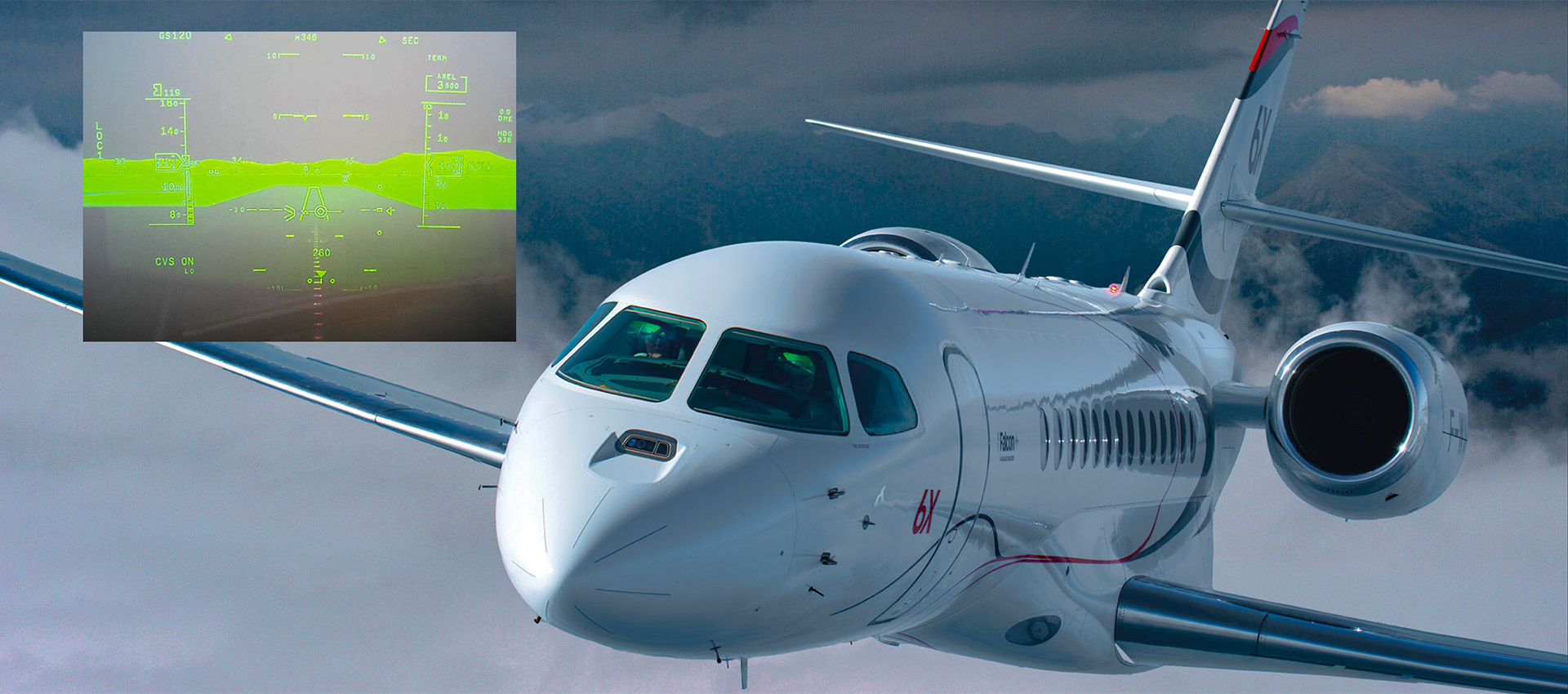
The first combined vision system of its kind, FalconEye® provides pilots with unprecedented all-weather situational awareness, day or night, in any phase of flight.
FalconEye’s enhanced, real-world view (EVS) is made possible by an array of cameras and sensors, enabling pilots to “see through” the fog of marginal weather, including the runway, lighting systems, airport structures and potential obstacles such as moving vehicles and animals during final approach. The FalconEye synthetic view (SVS), delivered via a regularly refreshed airport database, adds surrounding terrain context that may not be apparent with the near-focused camera/sensor system, providing an augmented-reality perspective.
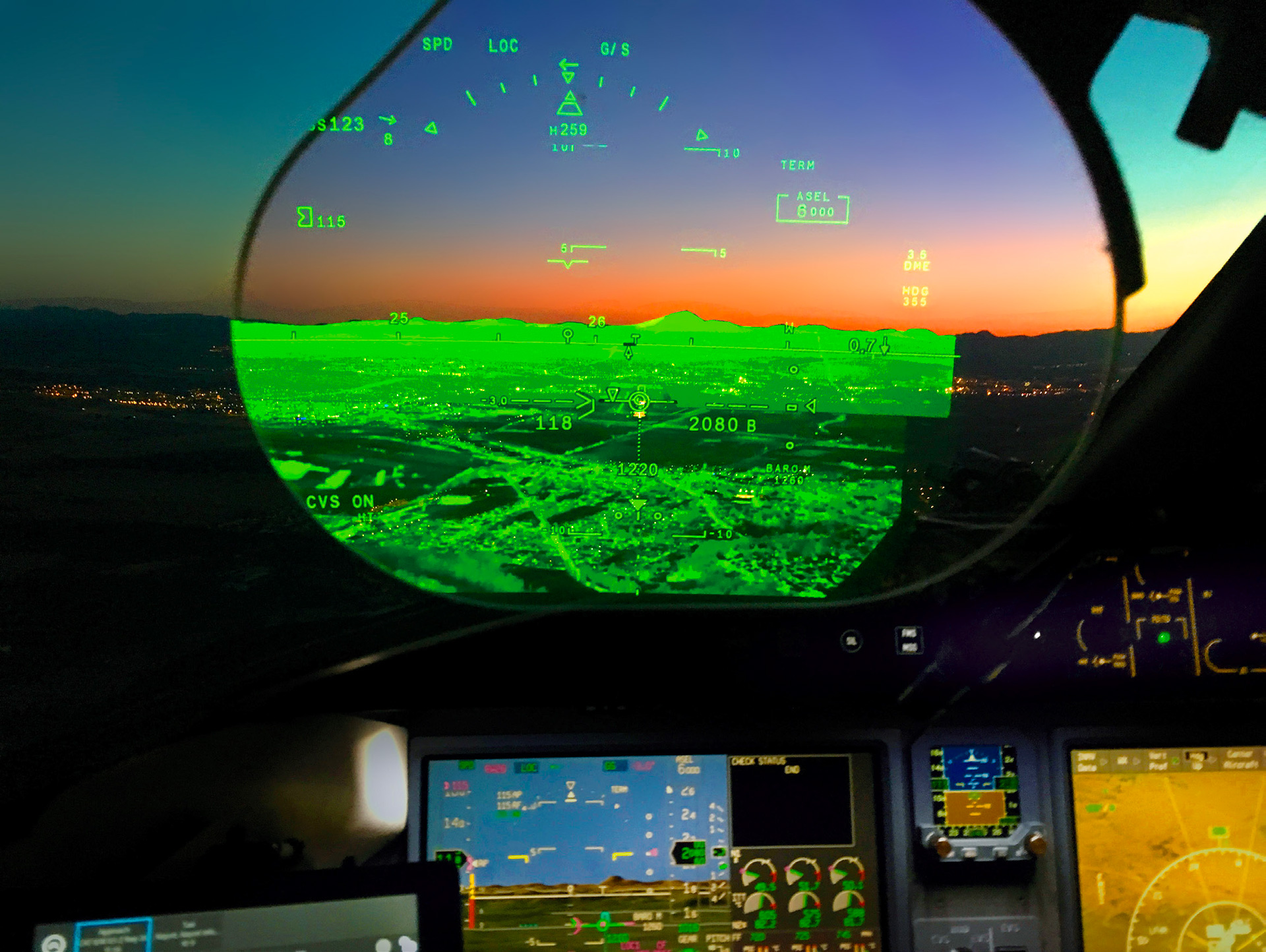
Enhanced and synthetic views are combined in a way unique to FalconEye. Other systems display heads-down SVS, whereas FalconEye displays both views in heads-up mode. Pilots can choose either view or a combination, with a patented clear zone they can manually adjust based on weather conditions, putting the pilot in full control.
A real breakthrough in synthetic vision
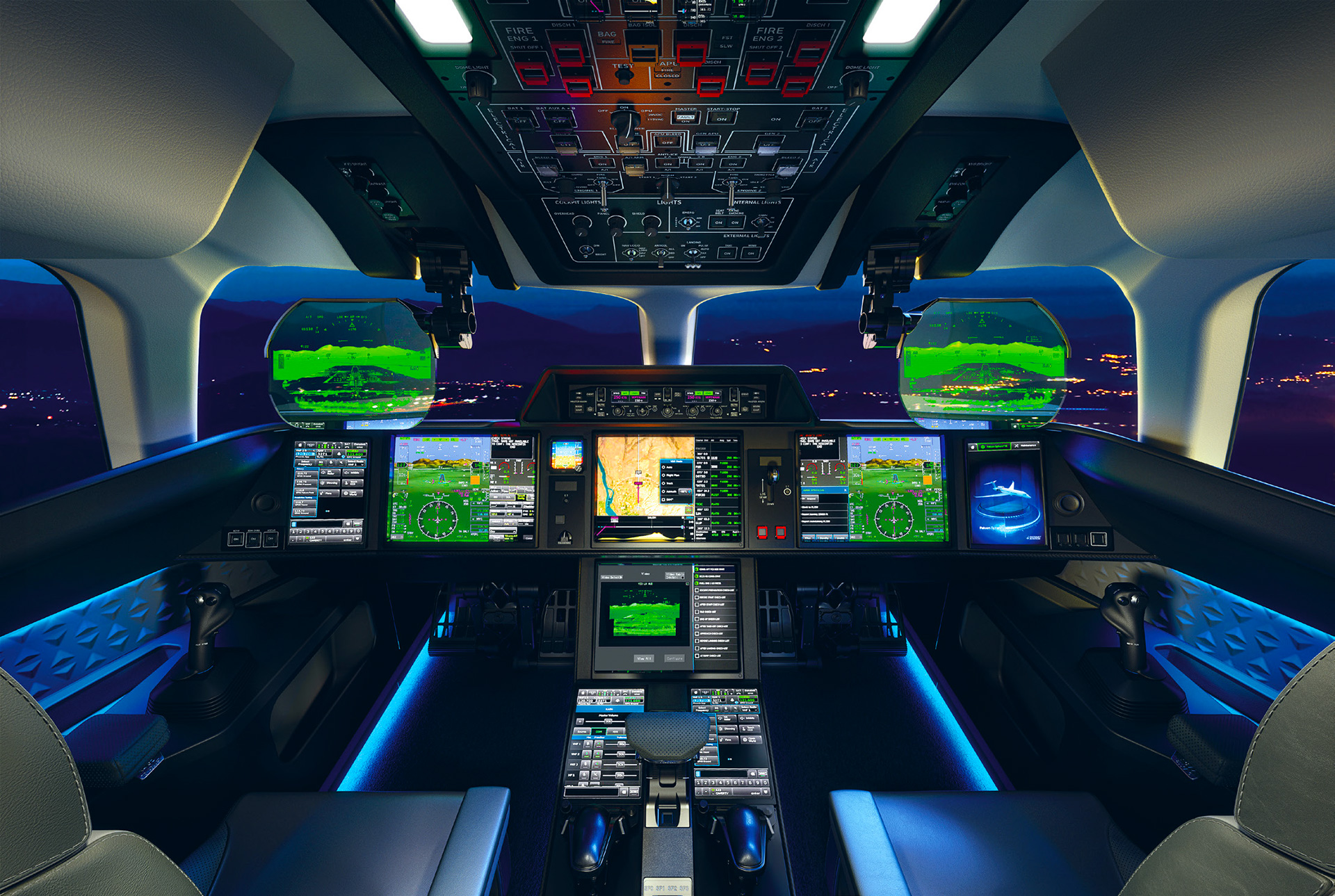
Dassault’s experience designing multi-spectral, high-resolution sensors and advanced HUDs (Head-Up Displays) for military aircraft made the technology transfer to business aviation possible. The FalconEye Synthetic Vision System (SVS) is based on highly accurate positioning data on terrain, airports and obstacles in a comprehensive database stored onboard the aircraft for all-weather situational awareness.
The advanced HUD has a large 40º x 30º field of view for a perfect SVS image. It’s the ideal complement to EVS during the critical approach to landing. And unlike other automated systems, the pilot controls how much he sees of each using the patented clear zones for minimum range and runway area.
Dassault is also leading the industry in HUD symbology, which has been redesigned for FalconEye. Since the early beginnings of EASy cockpit avionics, Falcon HUD symbology automatically adjusts to the phase of flight, reducing pilot workload and decision time.
Putting the “real” in real-world
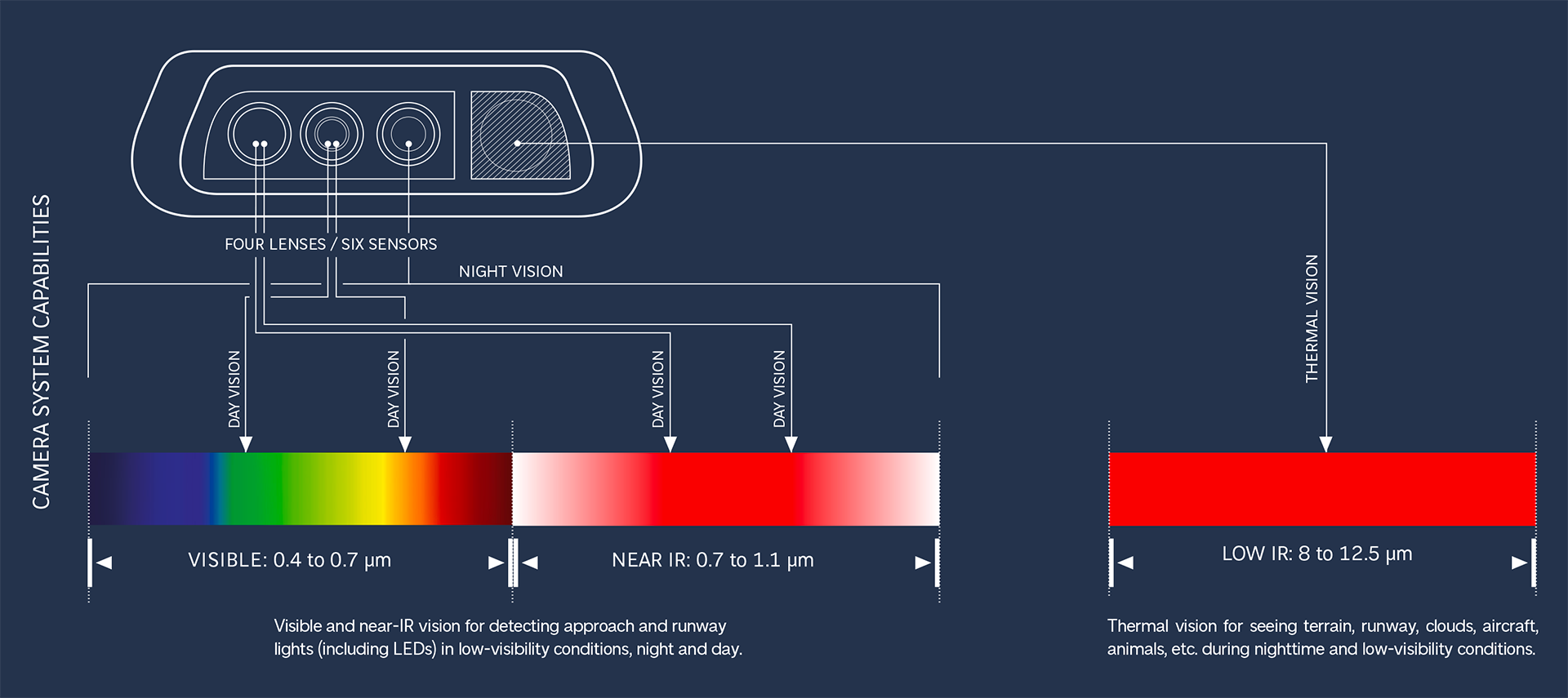
The unique FalconEye Enhanced Vision System (EVS) provides a multi-spectral (covering visible, near IR and long Wave IR), high-definition, enhanced, real-world image by fusing images.
The EVS camera comprises four lenses with six sensors:
- Four day sensors: dedicated to lights detection in day conditions and terrain imaging.
- One night sensor: dedicated to lights detection in night conditions and terrain imaging.
- One thermal sensor: dedicated to terrain imaging.
FalconEye sensors are also designed for LED light detection in both night and day conditions. This is a key benefit, since LED lights have become increasingly common on modern runways. FalconEye is one of the few OEM systems capable of detecting LED lighting and the first and only one to be certified for European operational credit at LED-equipped airports.
This is a key benefit, since LED lights have become increasingly common on modern runways. FalconEye is one of the few OEM systems capable of detecting LED lighting and the first and only one to be certified for European operational credit at LED-equipped airports.
EVS CAMERA TECHNOLOGY INCLUDES:
- Large field of view: 35º wide, 26.25º high
- High resolution: 1280 X 960 pixels
- 6 Uncooled sensors (high dynamic day sensor, low light / very high sensitivity night sensor)
Regulatory authorities’ experience with Enhanced Flight Vision Systems has led to new rules that let pilots operate in lower visibility, improving aircraft utility. Over the years, regulations have reduced minimum runway visibility, up to 30%, enabling pilots to proceed with approaches even if the reported weather is below published minimums for ceiling and visibility.
-
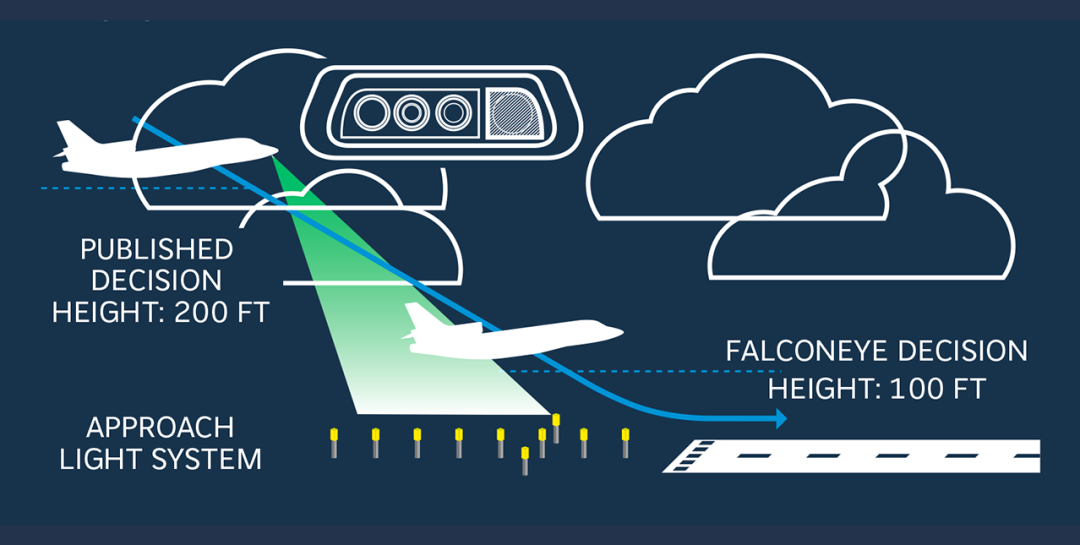
Certified for EFVS to 100 feet
The FalconEye CVS has been approved by EASA and the FAA for Enhanced Flight Vision System (EFVS) operations that provide operational credit for poor-visibility approaches down to 100 feet. Thus, they contribute to reducing the environmental footprint by allowing direct access to secondary airports, reducing diversions as well as holding times and go-arounds.
Now pilots can land at more airports in conditions close to CAT II conditions, significantly increasing the flexibility of flight operations.
FalconEye has been certified on the Falcon 8X, now with a dual HUD upgrade available, and on the Falcon 900LX and Falcon 2000LXS series aircraft. FalconEye is standard on the 6X, with a dual HUD option. A dual HUD system will be standard equipment on the in-certification Falcon 10X.