Structural Repair Training
Dassault Aviation developed the Dassault Training Academy to offer customers a comprehensive portfolio of training options, from entry-into-service through the entire life cycle of their aircraft.
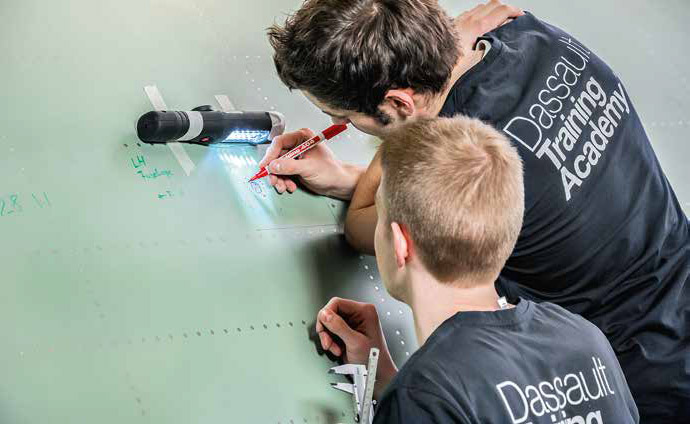
When your Falcon requires structural repair, you want to know it’s in the best hands.
This is why Dassault Training Academy is now offering state-of-the-art training in structural repair.
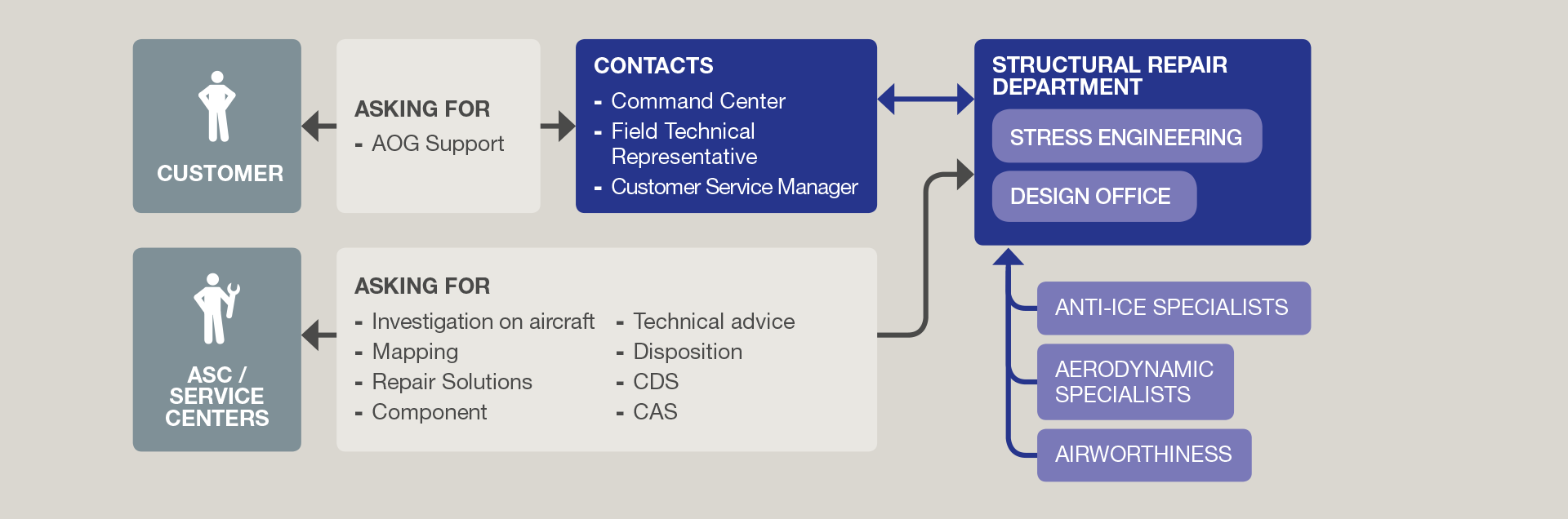
Falcon Structural Repair Training has been created in cooperation with the 24/7 Dassault Structural Engineering Support team, our global organization providing repair solutions, engineering dispositions and technical advice to operators around the world.
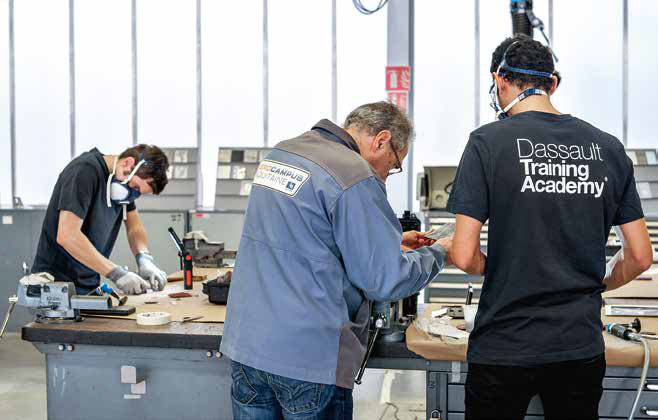
Working in partnership with AEROCAMPUS Aquitaine in Latresne near Bordeaux, France, Dassault Training Academy has developed a five-day Structure Repair Training program (Mapping & Corrosion; Composite Repair)
These two training courses will enable the maintenance crew to examine a Falcon aircraft for structural damage
and efficiently deliver repair solutions in line with the Structural Repair Manual (SRM) or Dassault-designed
repair schemes.
Dassault Structural Engineering Support
Original Equipment Manufacturer (OEM) Benefits
There are some obvious benefits to operators working with an OEM for their structural repair needs. First and
foremost is the comfort in knowing that the repair drawings and engineering dispositions are prepared by the same
engineers who designed their aircraft.
And unlike what might be offered by a Designated Engineering Representative (DER), the work of the Structural Engineering Support team is valid for the lifetime of the aircraft.
Other benefits of working with Dassault include:
- Retention of the initial structural mechanical characteristics
- No supplemental maintenance inspection requirement
- Damage-tolerant design
- A flush-repair as the first option
- EASA and FAA approved Change Description Sheet (CDS)
- Retention of value
- No effect on aircraft life limit
Course Description
Our commitment is to give you peace of mind knowing that our Authorized Service Centers network and customers are equipped with the knowledge and expertise to address your needs and get your Falcon in the air as quickly as possible.
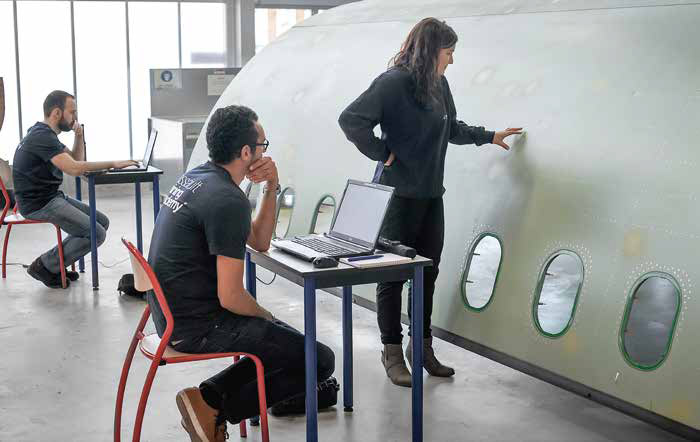
The Structural Repair Training class size is limited for specialized attention.
Instruction includes a detailed inspection of the Falcon aircraft, an overview of stress analysis (damage tolerance/knowledge of SRM part I & II), damage assessment (recognition/classification) along with repair drawing expertise, and techniques for mapping damage as part of the repair process.
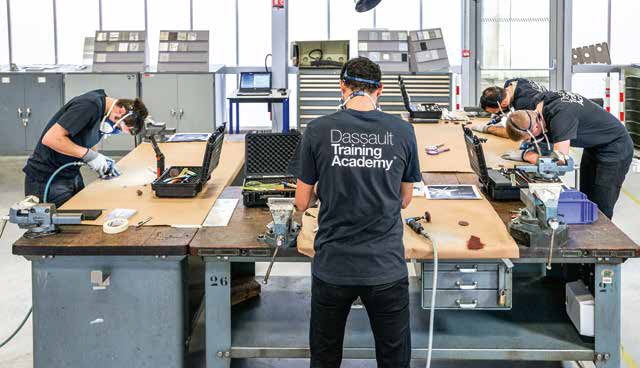
Each Training Module consists of theoretical, as well as practical instruction.
In the event that an aircraft requires a repair not covered by the documentation (SRM part I or II), the maintenance crew will have the expertise to communicate all of the assessed information to Dassault’s Structural Repair team so that they can provide a repair solution quickly and efficiently.
Mapping & Corrosion Training
Two proposed modules
Module I for Damage Identification, Module II for Corrosion and Protection
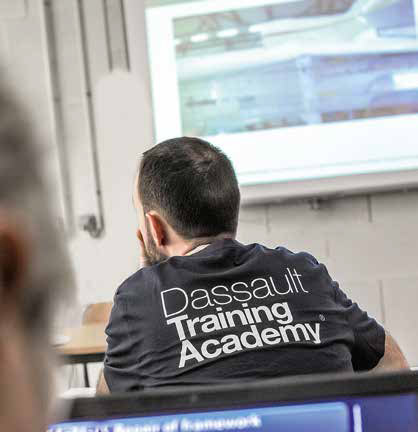
Module I: Damage Identification
Theoretical
- Knowledge of Falcon aircraft structure and the metallic materials used (material type and heat treatment)
- Knowledge of protection (heat treatment, anodizing, temporary protection, touch up, re-protection after blending, paint, etc.)
- Study of various types of corrosion, their structural effect
- Assessment and mapping of corrosion damage (for repair process evaluation)
- General overview of various Non-Destructive Tests (NDT), including fluorescent dye penetrant detection, eddy-current inspection, ultrasonic inspection (NDT training is available from Dassault Aviation through other course offerings)
- Analysis of the damage report and development of the repair solution
- Procedures for working with Dassault Structural Repair group when damage exceeds SRM limitations
- Process to return the aircraft to service (CDS, NTO)
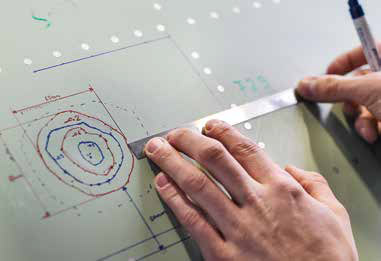
Practical
- Review of safety procedures
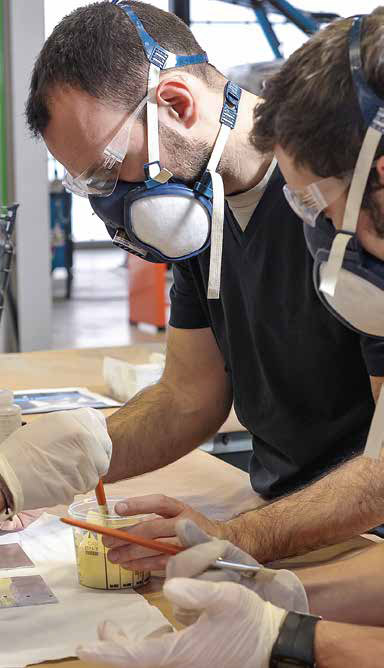
- Application of the SRM procedure 51-71-01 and the Aircraft Maintenance Manual (AMM) procedure 20-60-00 (covers blending through sanding to eliminate corrosion)
- Application of new protection products
- Assessment, mapping and preparing damage report (for repair process evaluation)
Module II. Corrosion and Protection
Theoretical
- Knowledge of Falcon aircraft structure and the metallic materials used (material type and heat treatment)
- Knowledge of protection (heat treatment, anodizing, temporary protection, touch up, re-protection after blending, paint, etc.)
- Study of various types of corrosion, their structural effect
- Assessment and mapping of corrosion damage (for repair process evaluation)
- General overview of various Non-Destructive Tests (NDT), including fluorescent dye penetrant detection, eddy-current inspection, ultrasonic inspection (NDT training is available from Dassault Aviation through other course offerings)
- Analysis of the damage report and development of the repair solution
- Procedures for working with Dassault Structural Repair group when damage exceeds SRM limitations
- Process to return the aircraft to service (CDS, NTO)
Practical
- Review of safety procedures
- Application of the SRM procedure 51-71-01 and the Aircraft Maintenance Manual (AMM) procedure 20-60-00 (covers blending through sanding to eliminate corrosion)
- Application of new protection products
- Assessment, mapping and preparing damage report (for repair process evaluation)
Composite Repair Training
Two levels of training are offered
Level 1 "Introduction to Composite Repair", and Level 2: "Advanced Composite Repair"
Training Level 1: Introduction to
Composite Repair
(without prerequisite)
Theoretical
- Knowledge of Falcon aircraft structure and the composite materials used
- NDT introduction for damage identification on composite part (light)
- Damage identification and repair process
- General presentation of documentation (SRM)
- Structural repair versus nonstructural repair
- Paint process
Practical
- Small part manufacturing (sandwich)
- Bonding mesh installation
- Tedlar installation
- Resin injection
- Resin clogging
- Insert (removal installation)
- Tap test
Training Level 2: Advanced Composite Repair
(required prerequisite – have already carried out composite repairs or completed Level 1 training)
Theoretical
- Composite properties (fibers and resin)
- Manufacturing (lay-up, auto clave)
- NDT introduction for damage identification on composite part (Tap testing + Ultrasonic method)
- Damage identification and repair process
- Detailed presentation of SRM composite section
Practical
- Stirrup
- Honeycomb insert installation
- Repair “in step”
- Composite doubleur installation
- Bonding mesh repair
- Tedlar repair
- NDT (Tap testing + Ultrasonic testing)
“ When an engineering request comes in – ranging from corrosion treatment to remediation of cracks and dents or large-scale ground incidents – the operators’ role is capital to send all of the assessed information to Dassault’s Structural Repair team to provide a repair solution quickly and efficiently. This training is based on methods that involve people and bring knowledge into operation.”
Yannick Mary, Dassault Structural Repair Manager
Schema of the Structural Engineering Support Process
Dassault Training Academy Contacts:
Guilhem ROUSSET
Phone: +33 1 47 11 33 72
Mobile: +33 6 17 44 70 12
Patrice KURDIJIAN
Phone: +33 1 47 11 36 25
Mobile: +33 6 32 63 36 71
E-mail: dassaulttrainingacademy@dassault-aviation.com