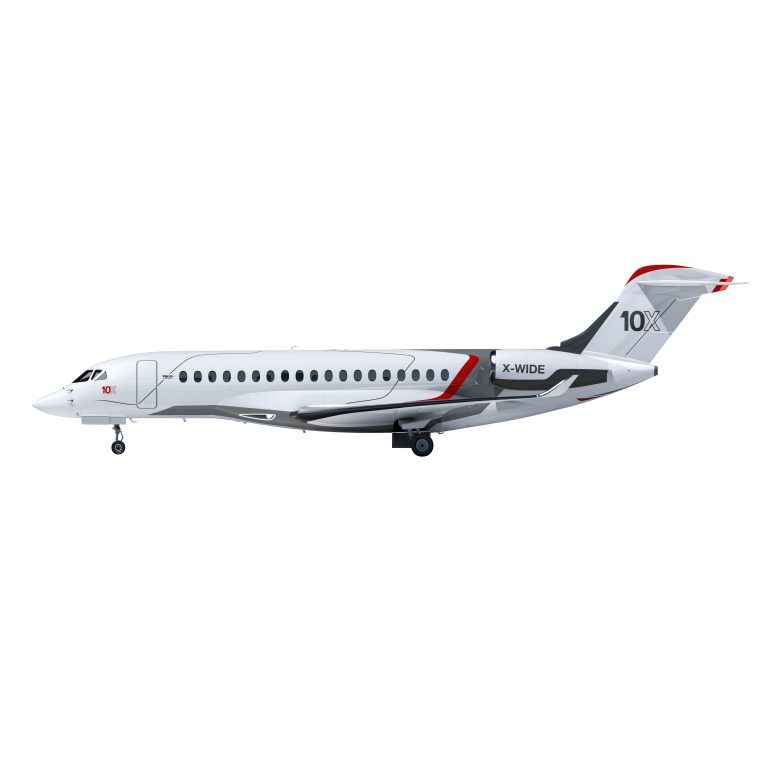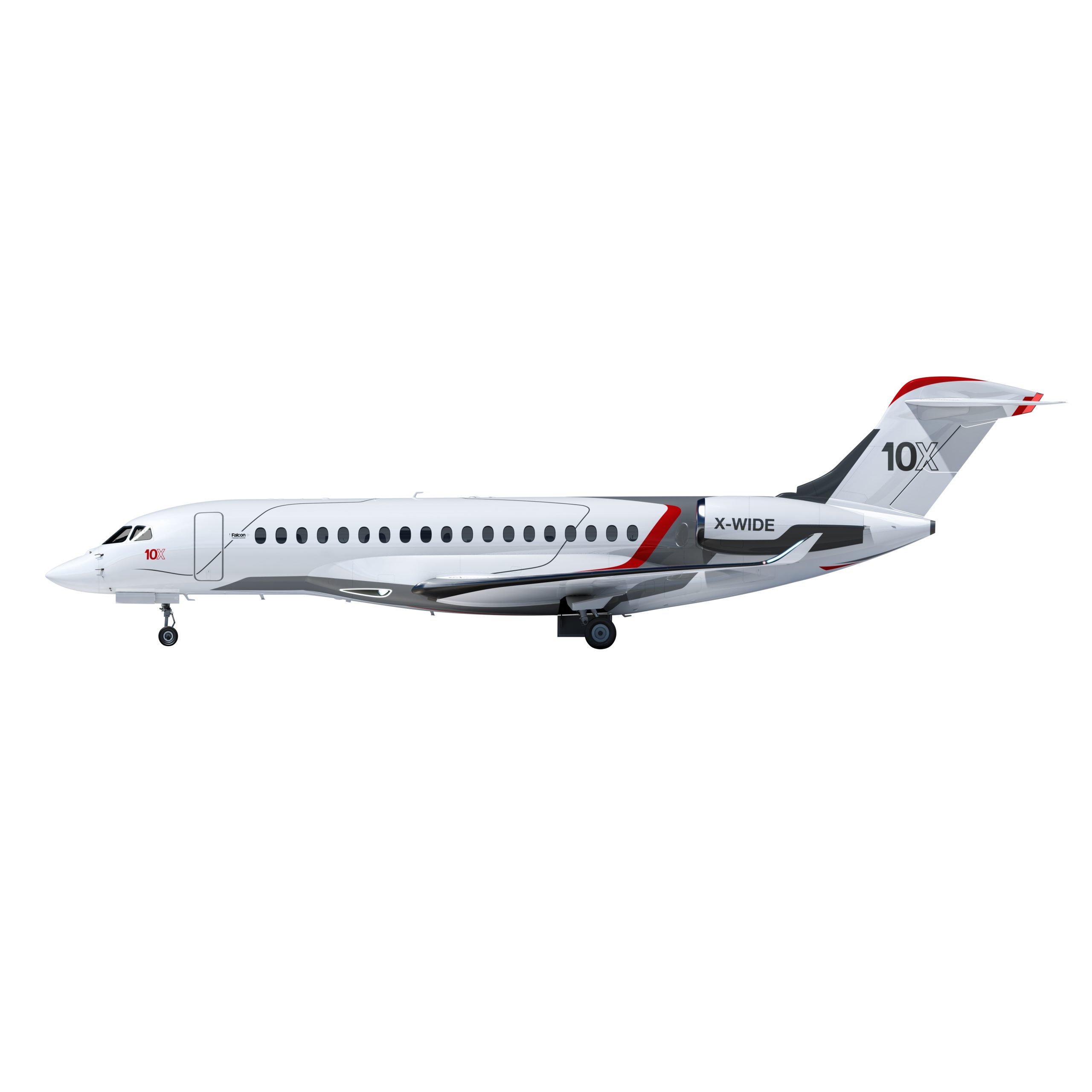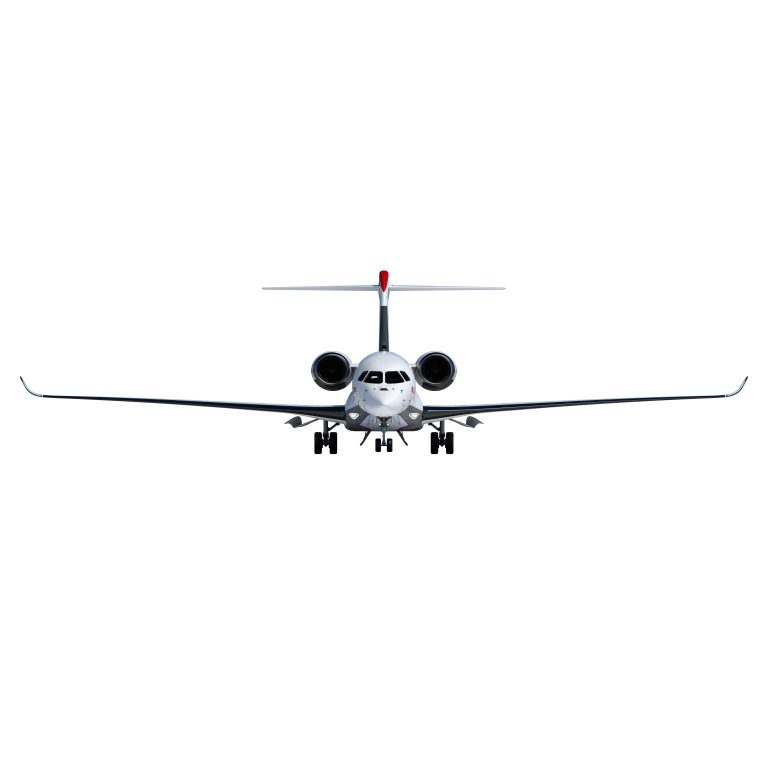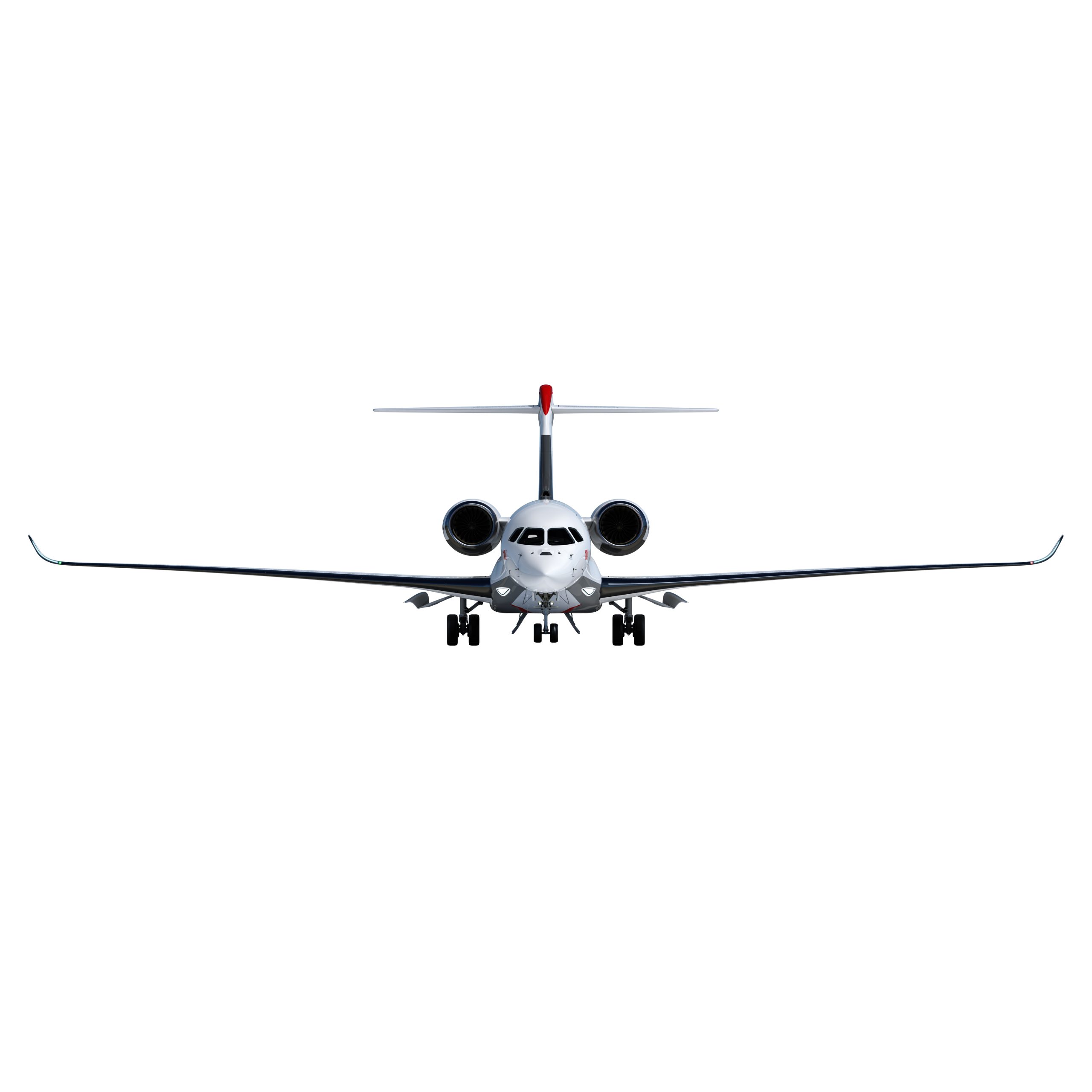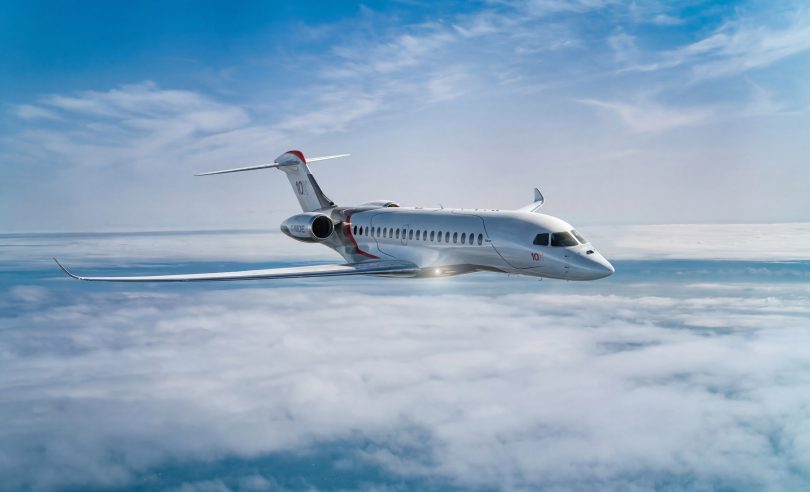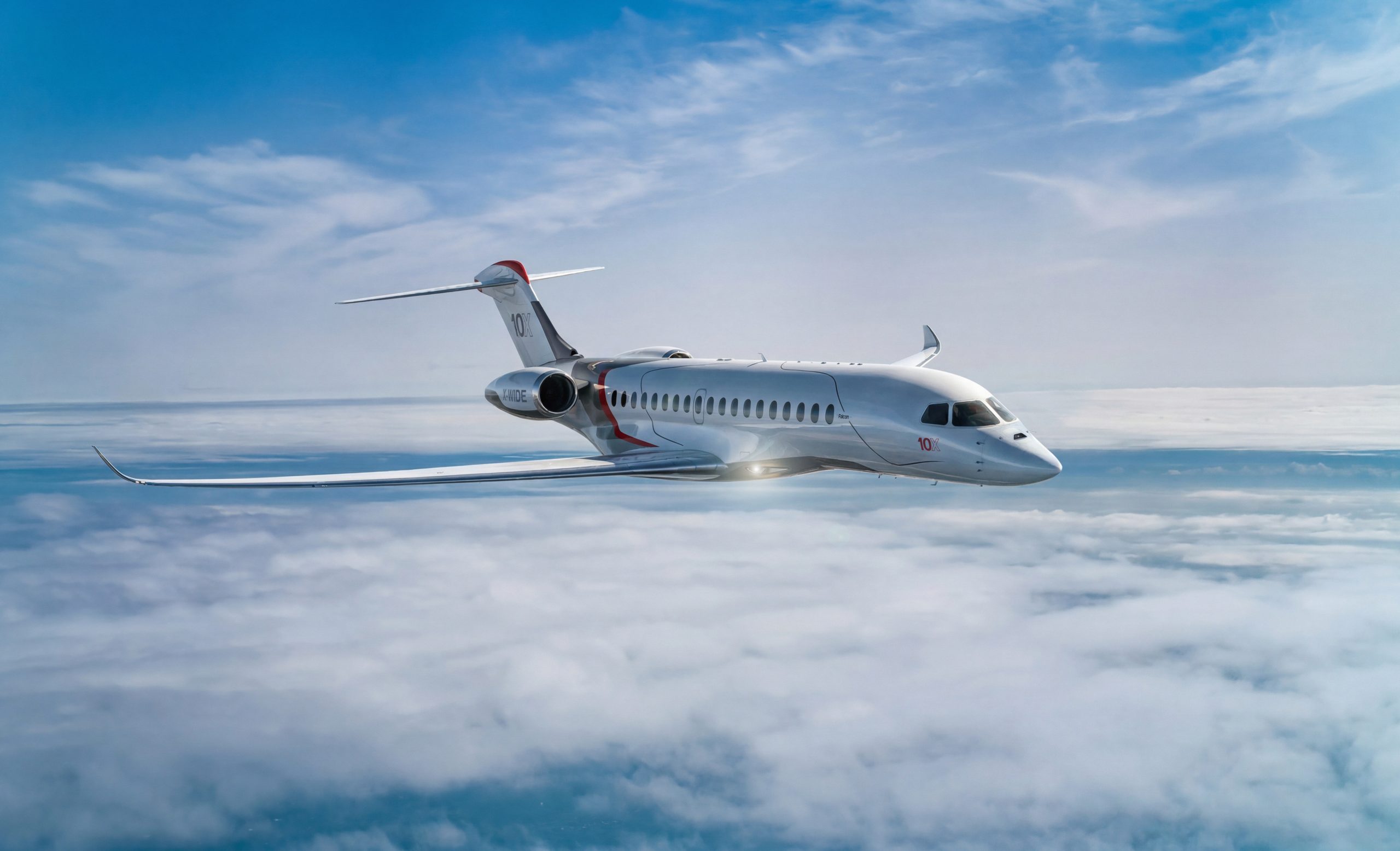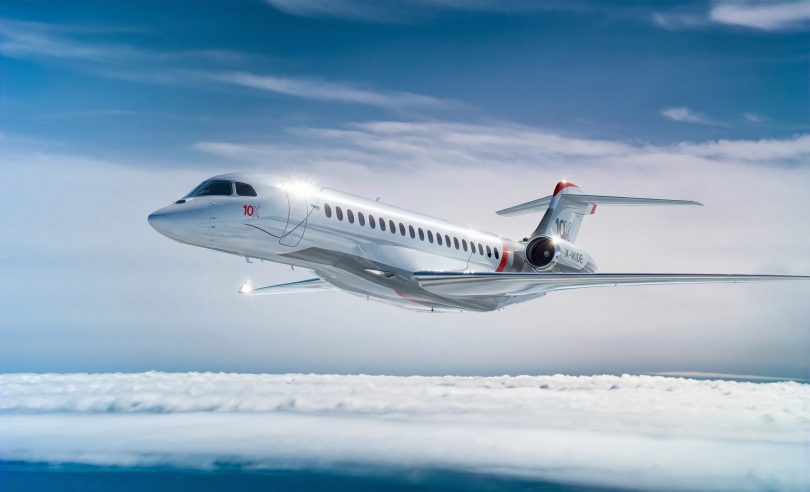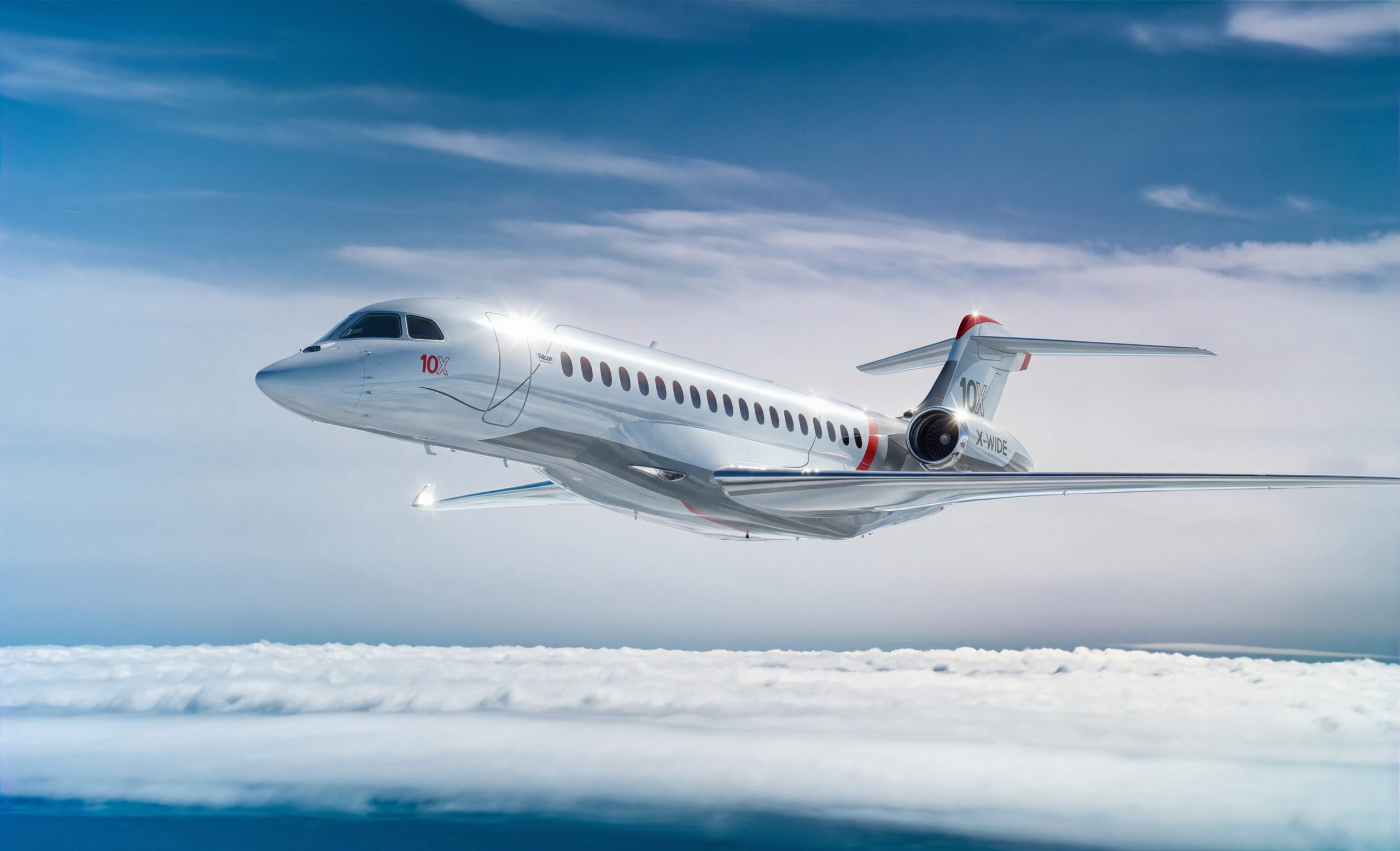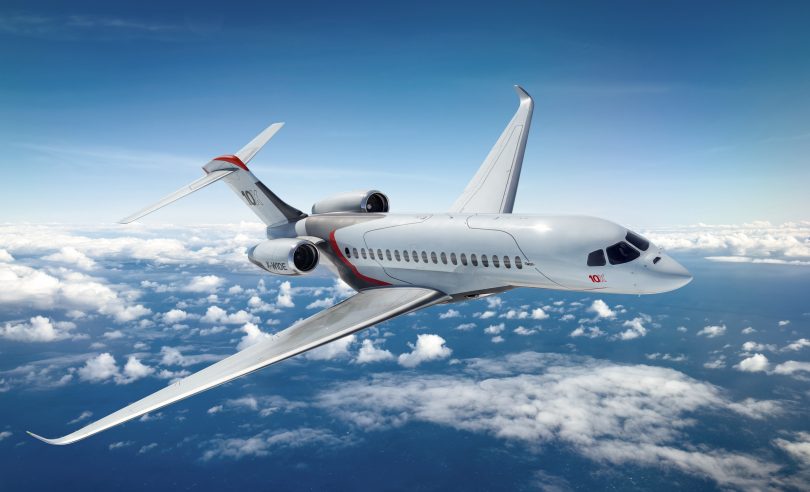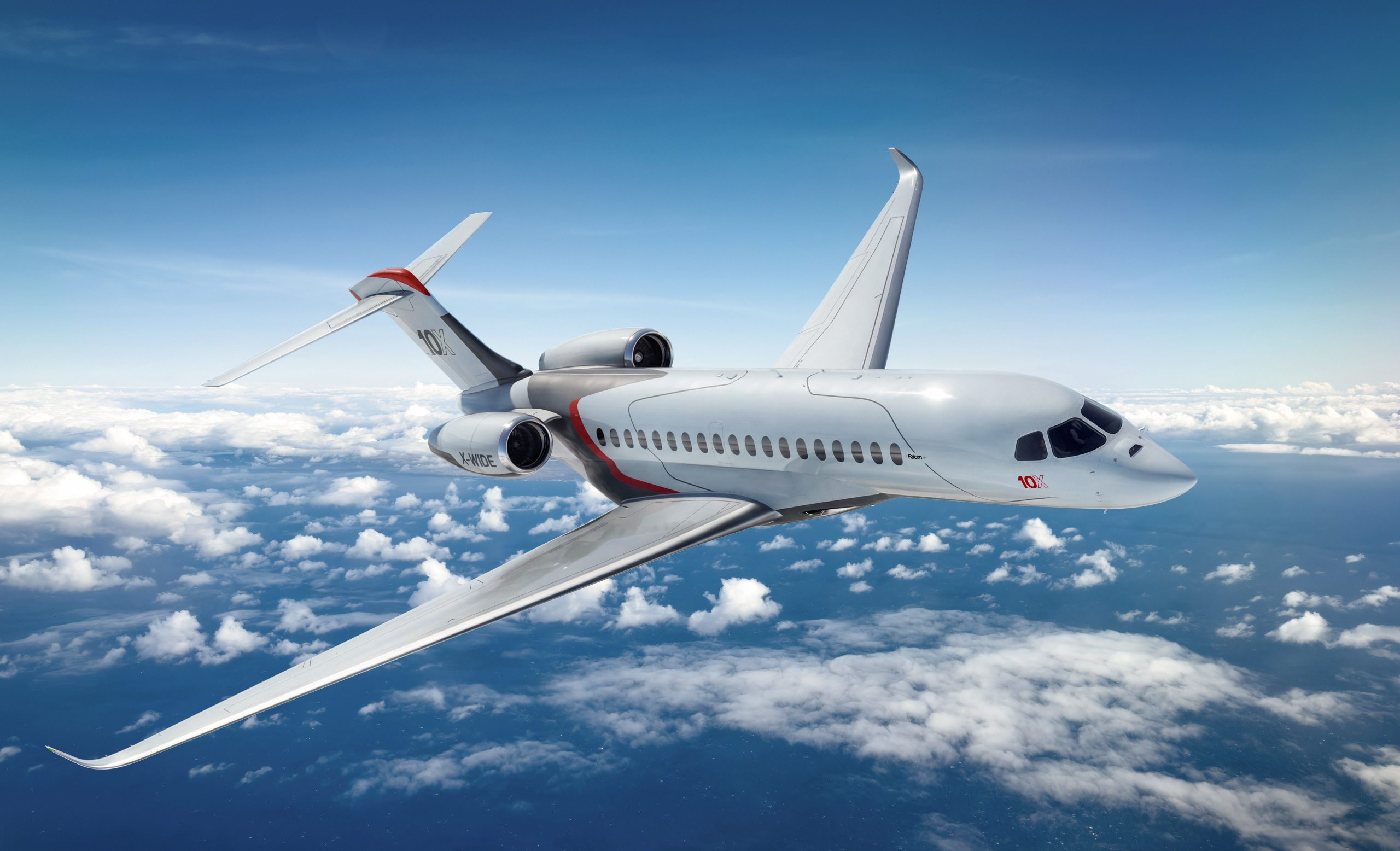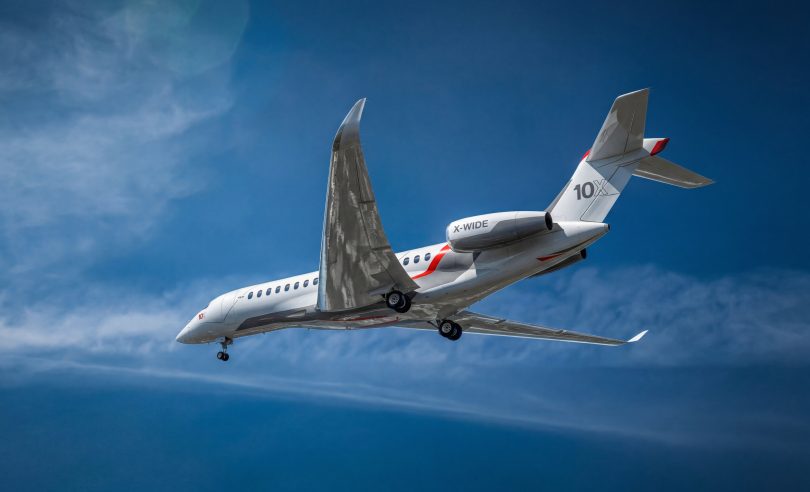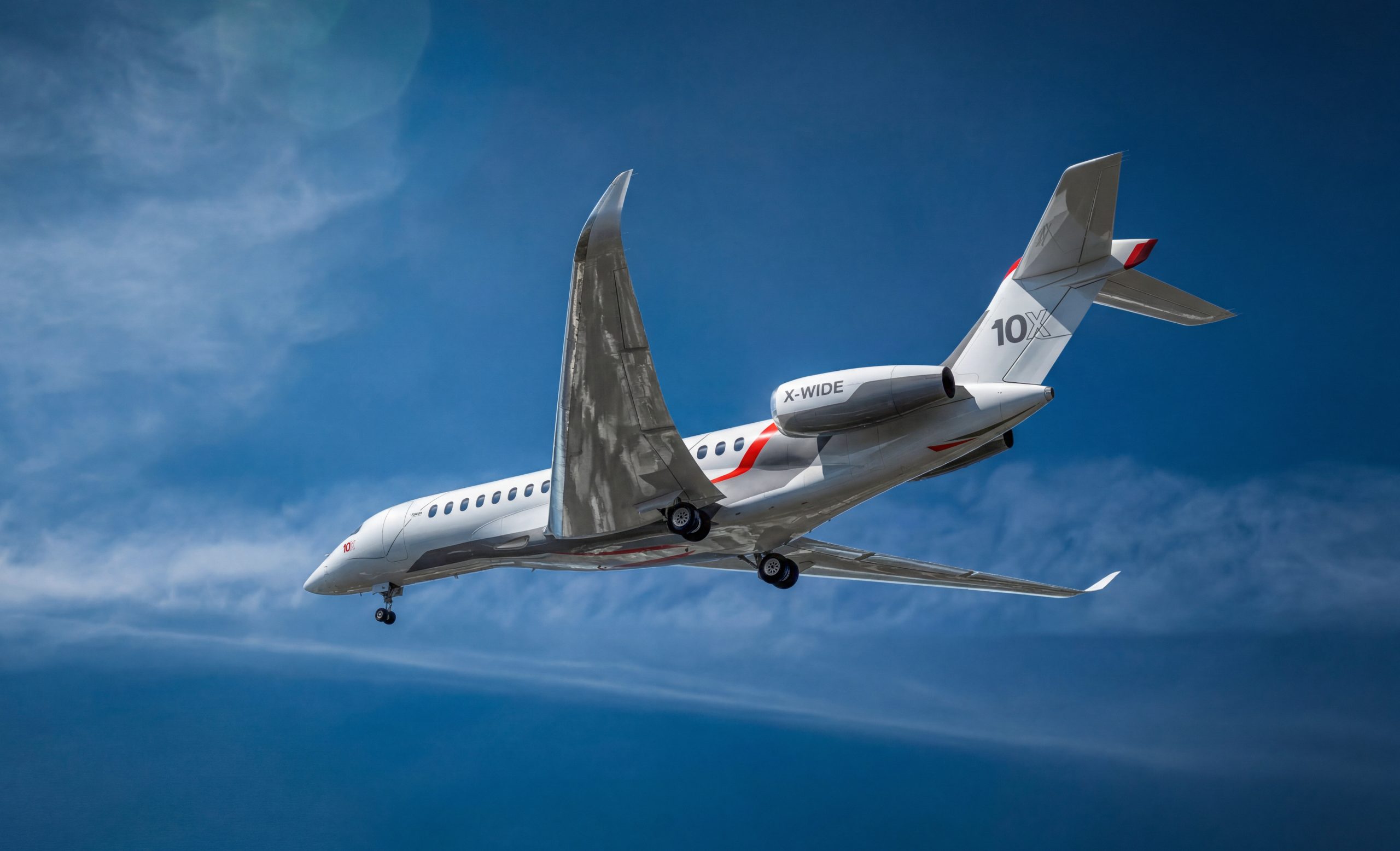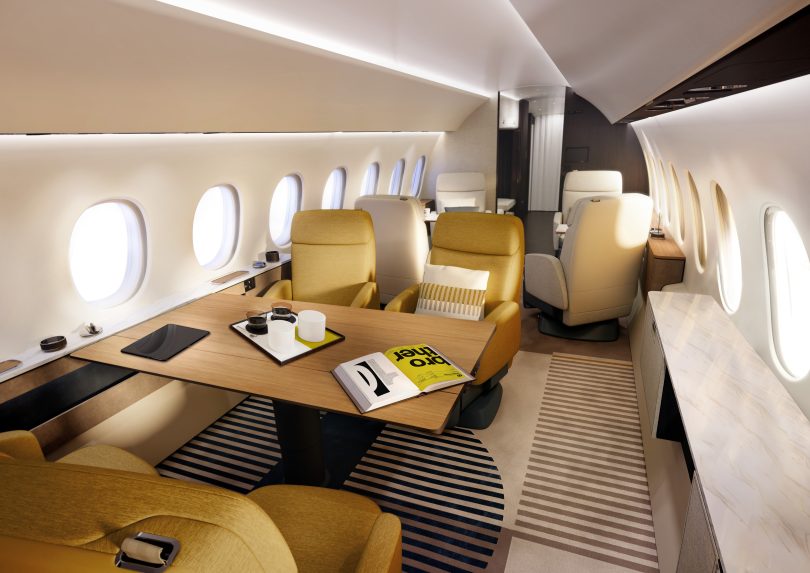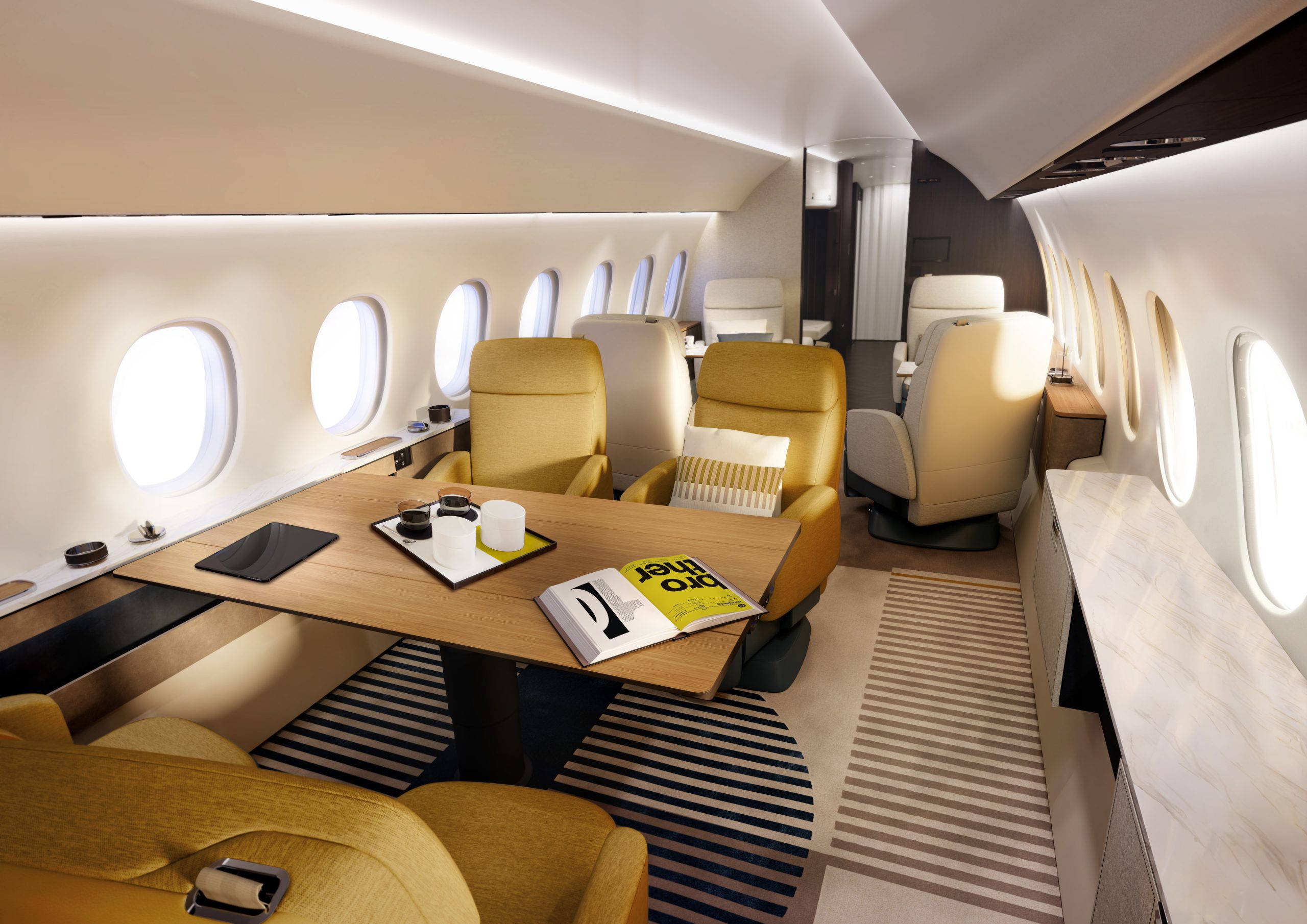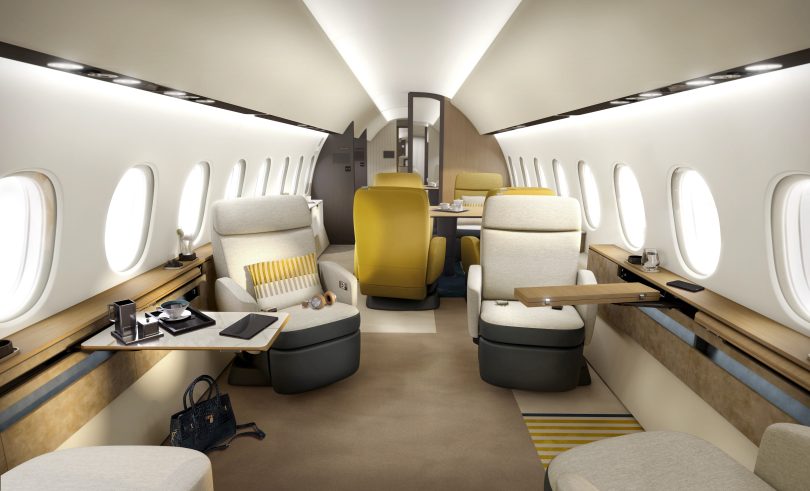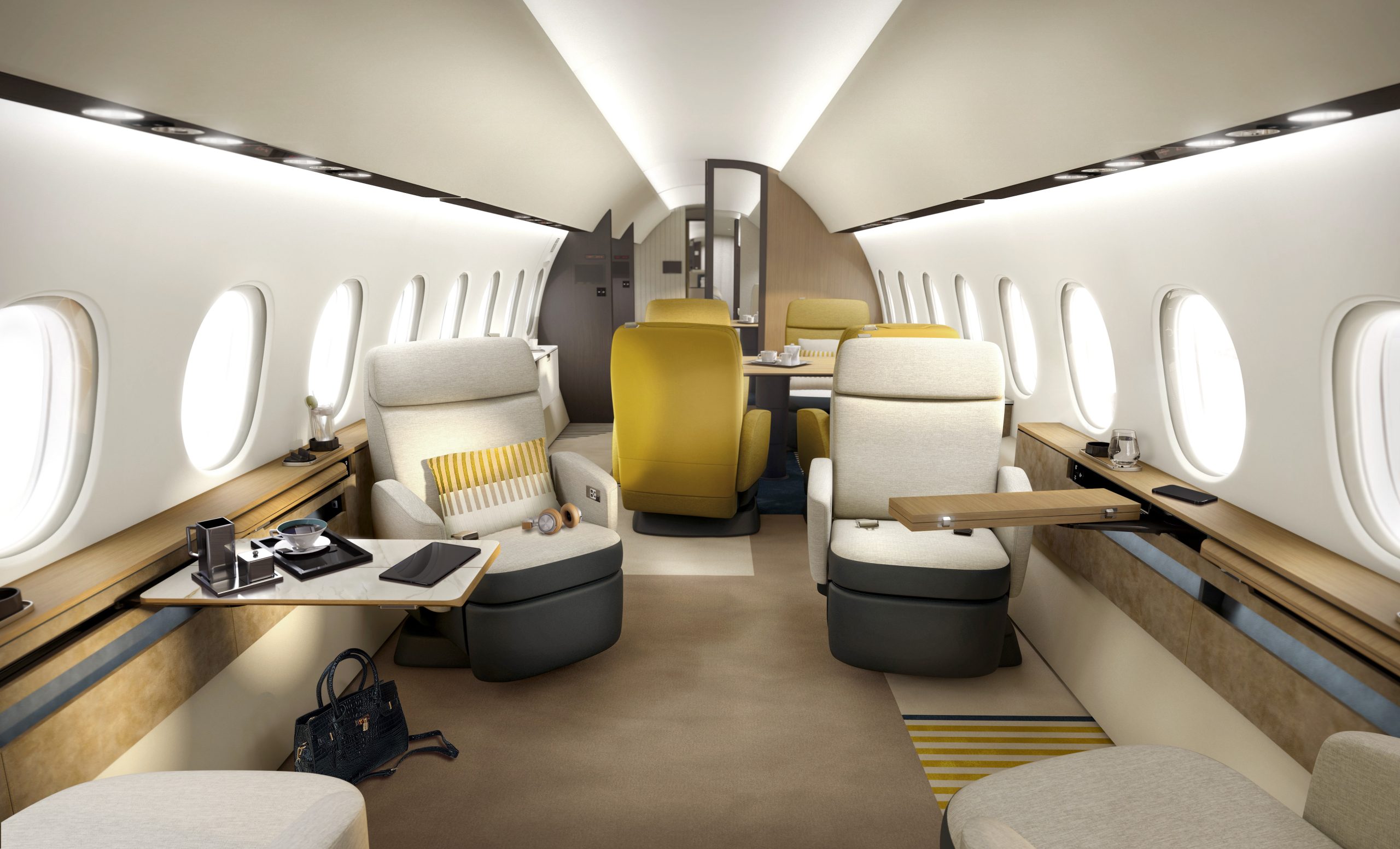
Falcon 10X combines Dassault fighter DNA and new technologies with the largest, most capable and customizable cabin in business aviation
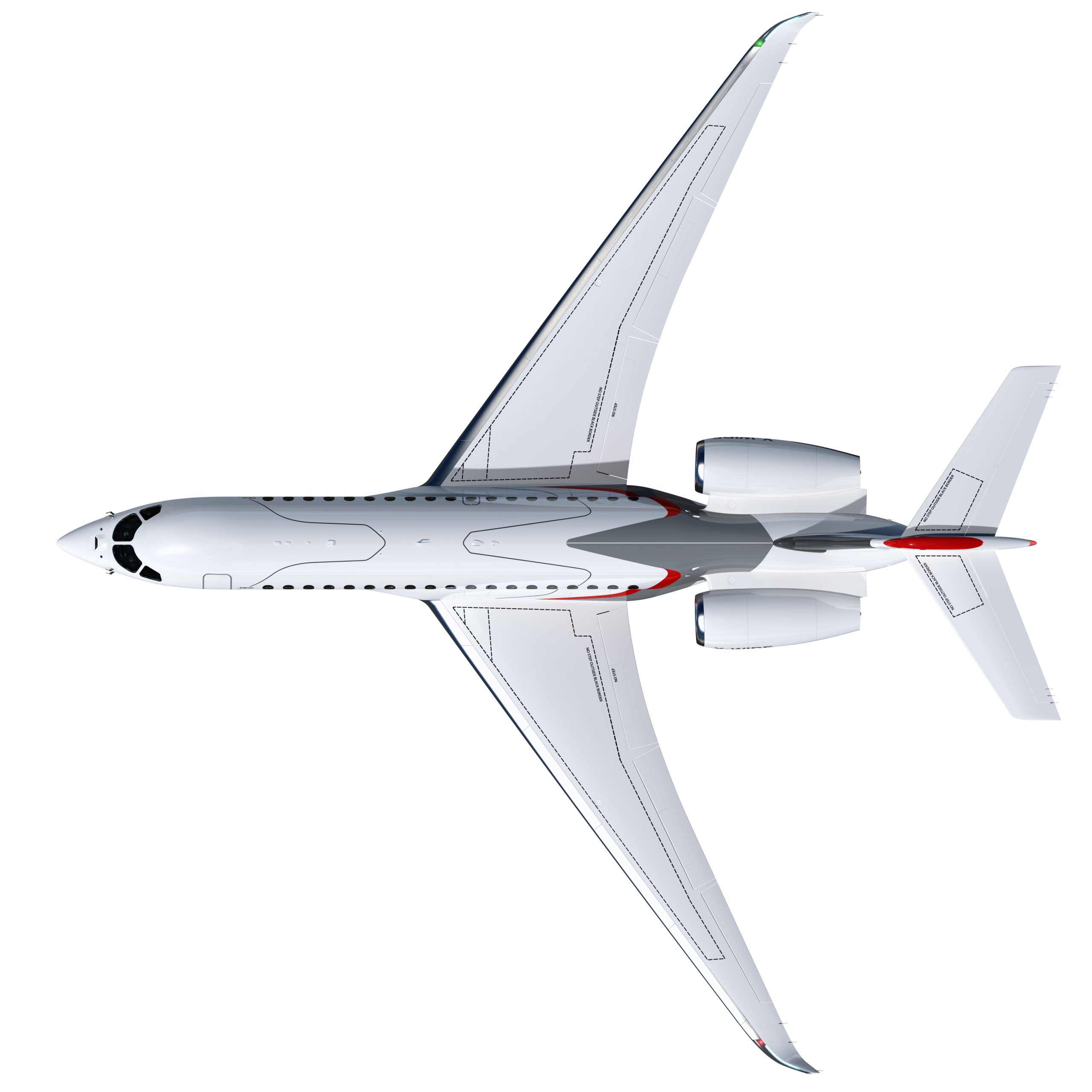
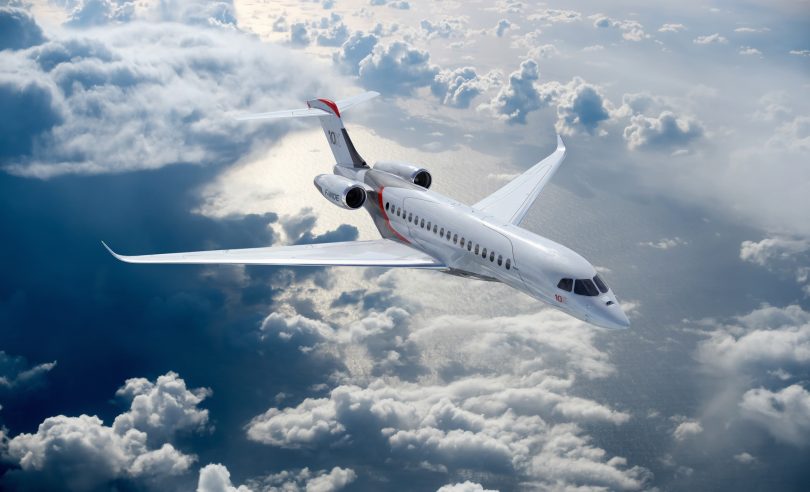
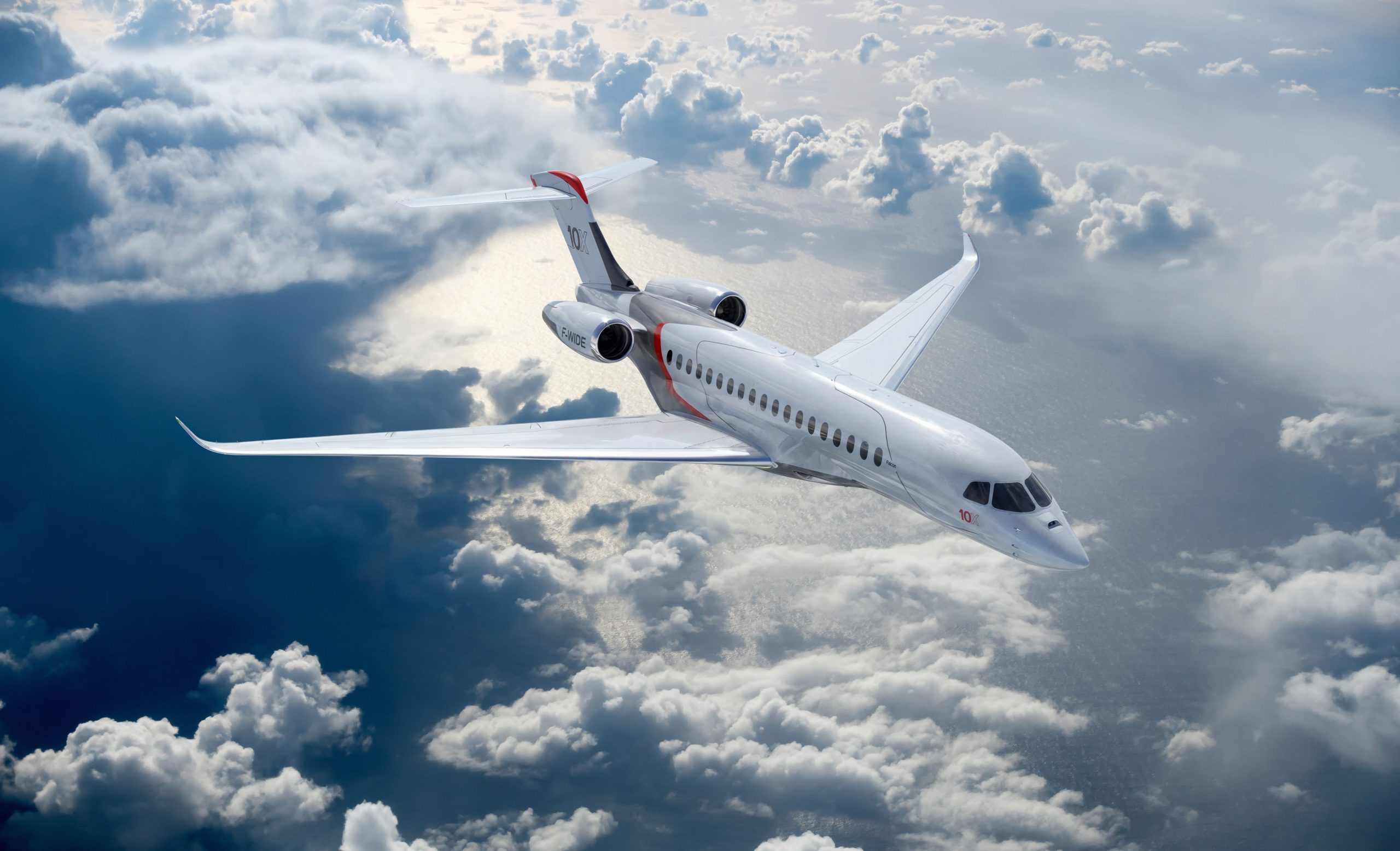
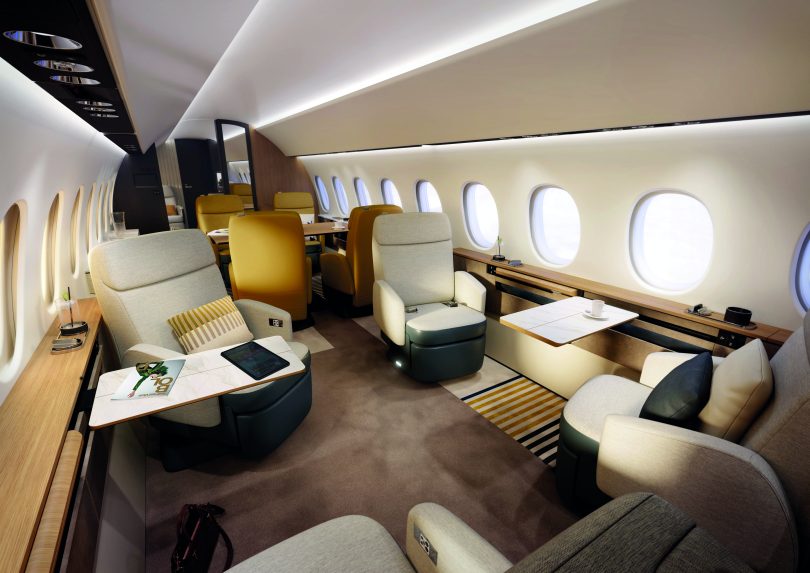
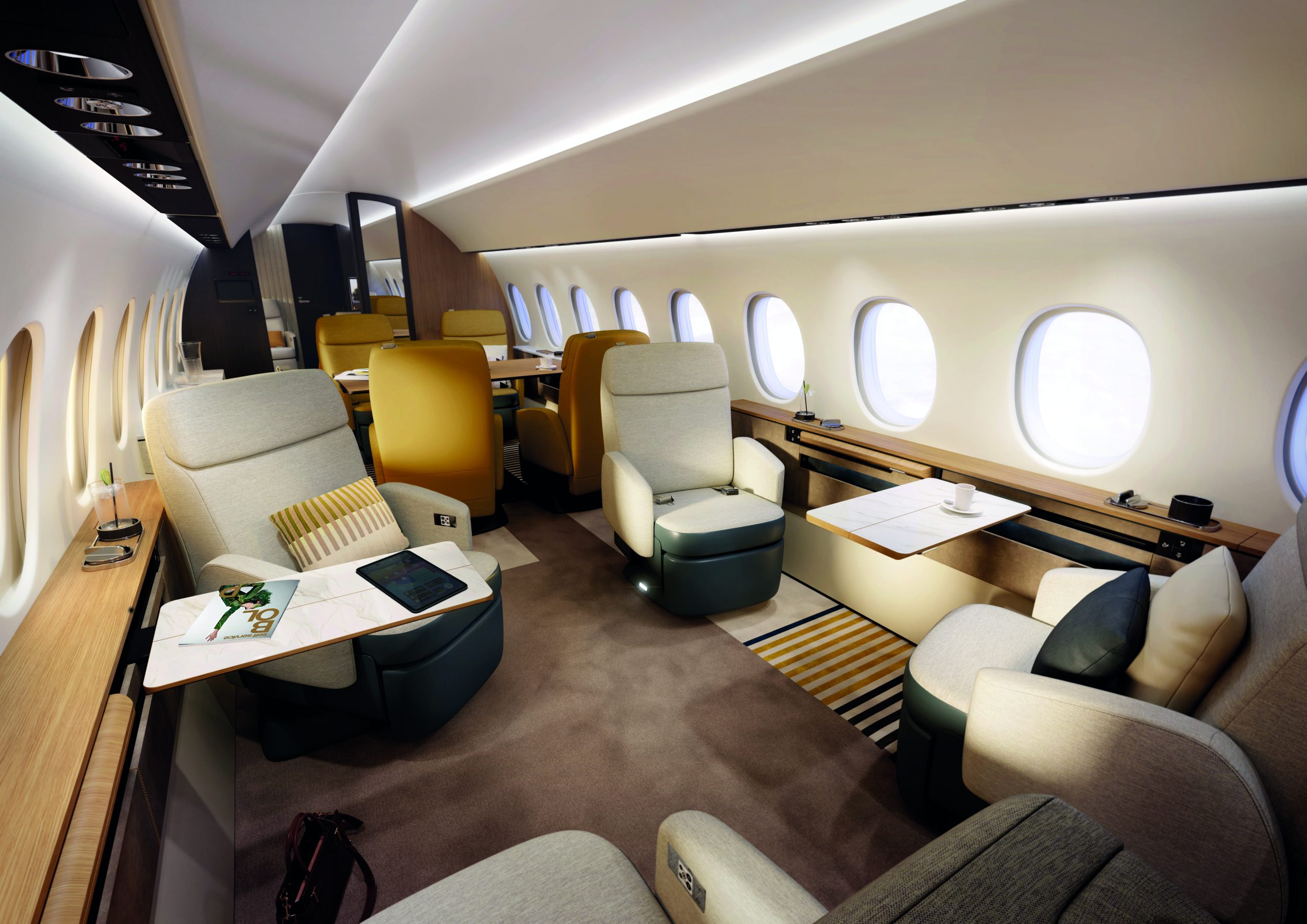
Dassault Aviation began with a clean sheet to create the Falcon 10X, the largest and most capable purpose-built business jet ever developed. Its cabin is the largest in business aviation with a new level of flexibility in creating a customized interior environment. New, high-speed aerodynamics yield a maximum range capability of 7,500 nm (13,890 km) and a top speed of Mach 0.925.
Dassault’s Digital Flight Control System on the 10X includes safety features new to business aviation, providing protection from inadvertent upsets and other hazards—features that stem directly from the company’s military aircraft.
To create an efficient business jet with a largest-in-class cabin required innovations in structures, aerodynamics, flight controls and powerplants. To achieve its ambitious design objectives, the company concluded a derivative aircraft would not suffice. That is why it instead elected to design a 100-percent new aircraft, which further entailed a series of new production facilities sized for the 10X (for example a new composite wing facility in Anglet, France and an entirely new final assembly hall in Bordeaux-Mérignac) equipped with the technologies to produce advanced structures and install advanced systems.
A specific design objective was to create a cabin offering the biggest cabin volume of any purpose-built business jet while retaining classic Falcon high altitude performance and the ability to use typical business aviation airports without specialized airliner ground equipment. Through more than a decade of design iteration, Dassault achieved a perfect balance of maximum size, performance, business jet utility and autonomy.
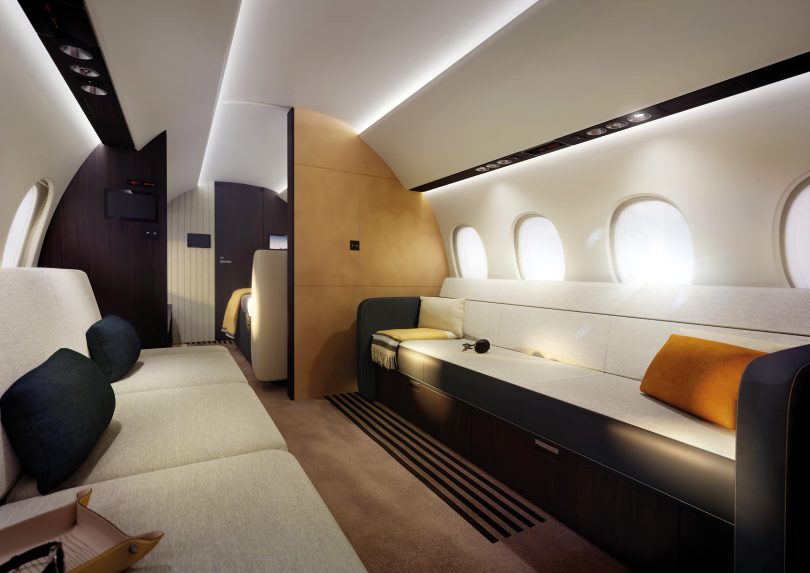
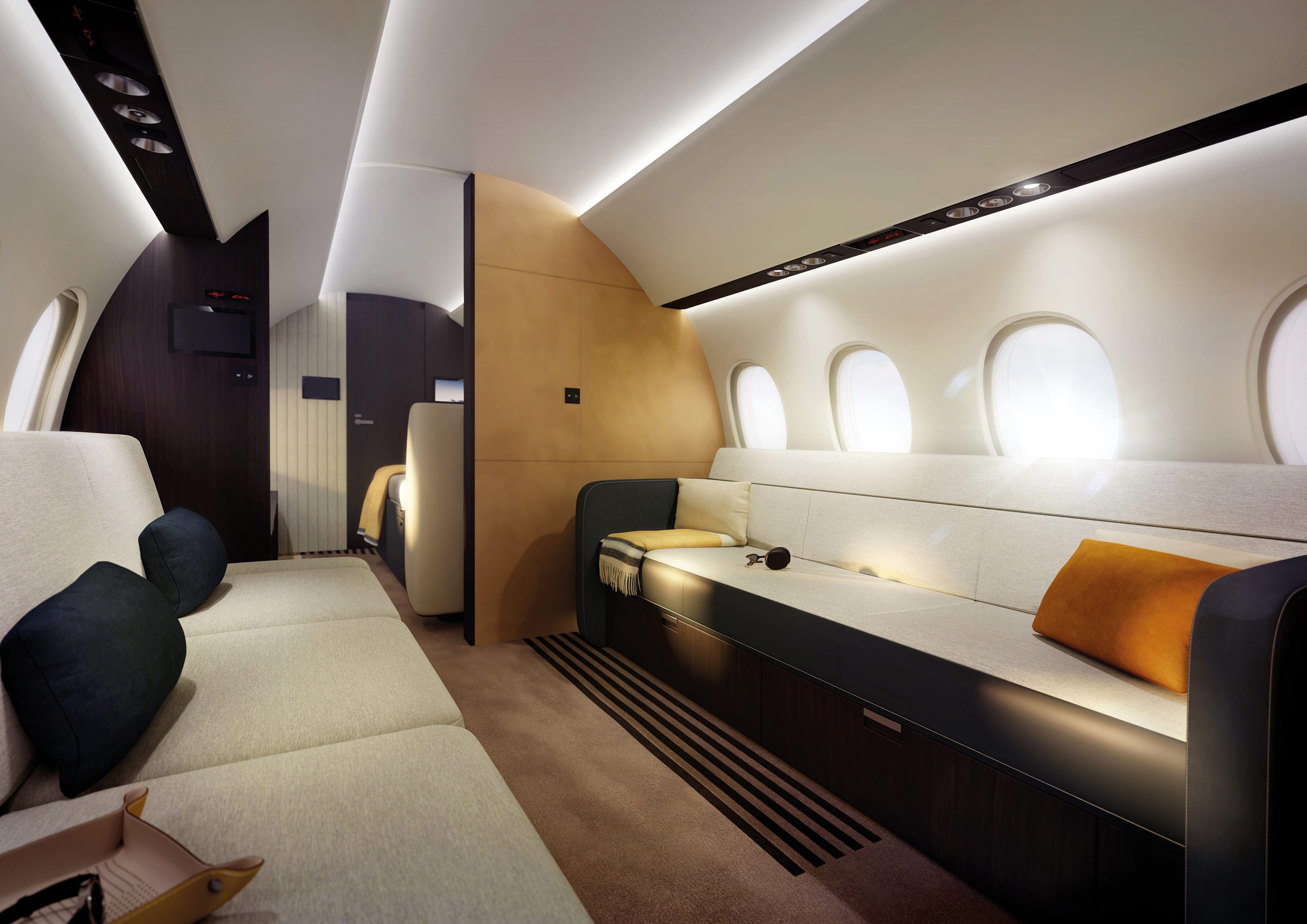
The Largest, Most Flexible Cabin in Business Aviation
A modular cabin design that lets owners, essentially “move the walls” and create their own customized spaces
The sheer dimensions of its cabin and the flexibility of interior configurations distinguish the 10X from other ultra long-range jets.
With a cabin volume of 2,780 cubic feet (79 cubic meters), the 10X offers the largest cabin interior of any purpose-built business jet. It’s almost 8 inches (20 cm) wider than its competitors.
- Cabin height: 6 ft, 8 in (2.03 m)
- Max width: 9 ft, 1 in (2.77 m)
- Cabin length: 53 ft, 10 in (16.4 m)
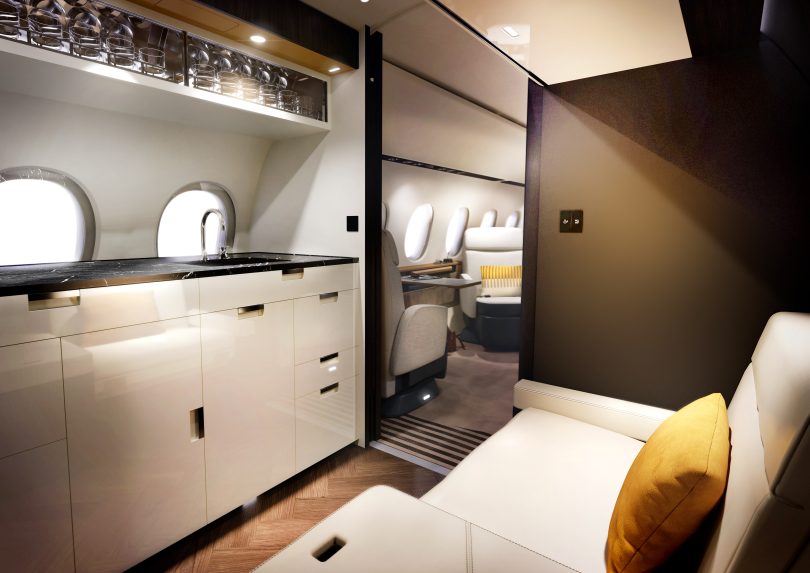
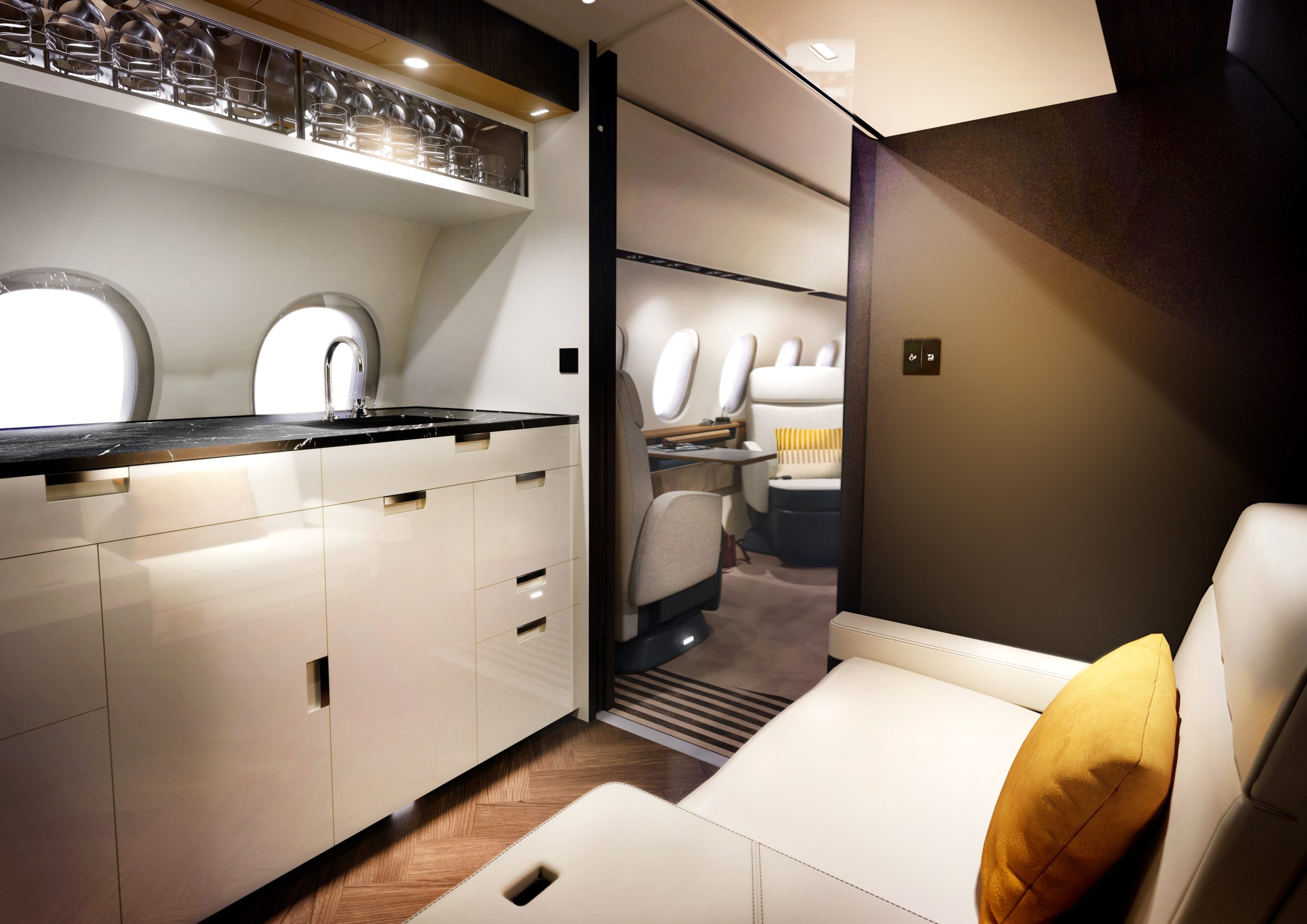
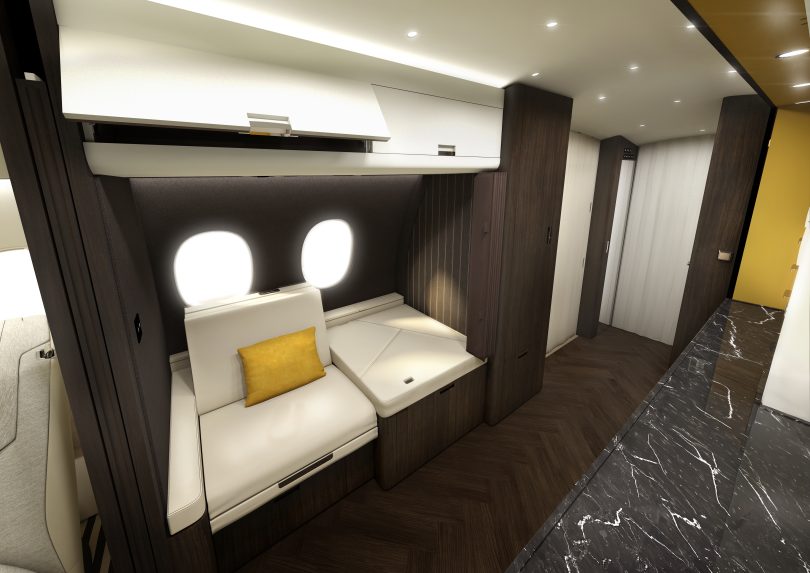
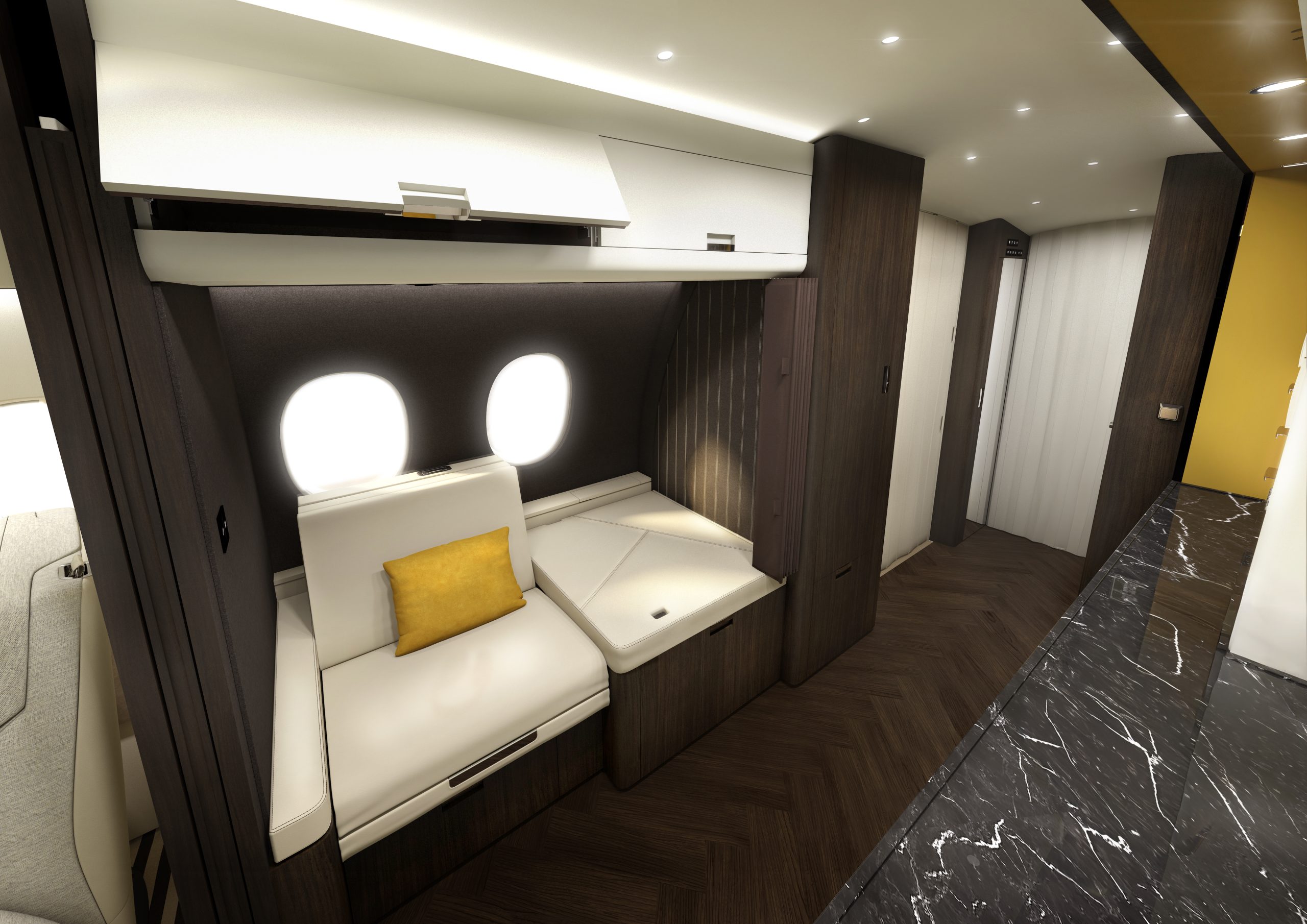
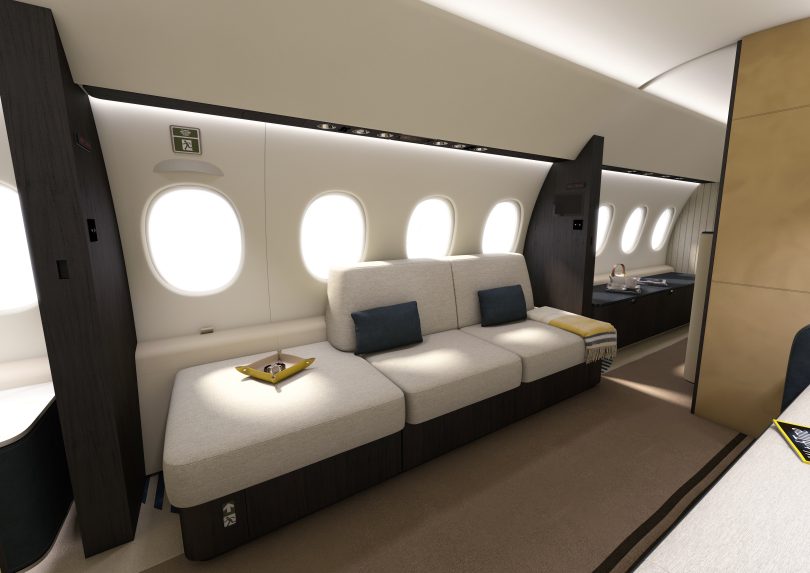
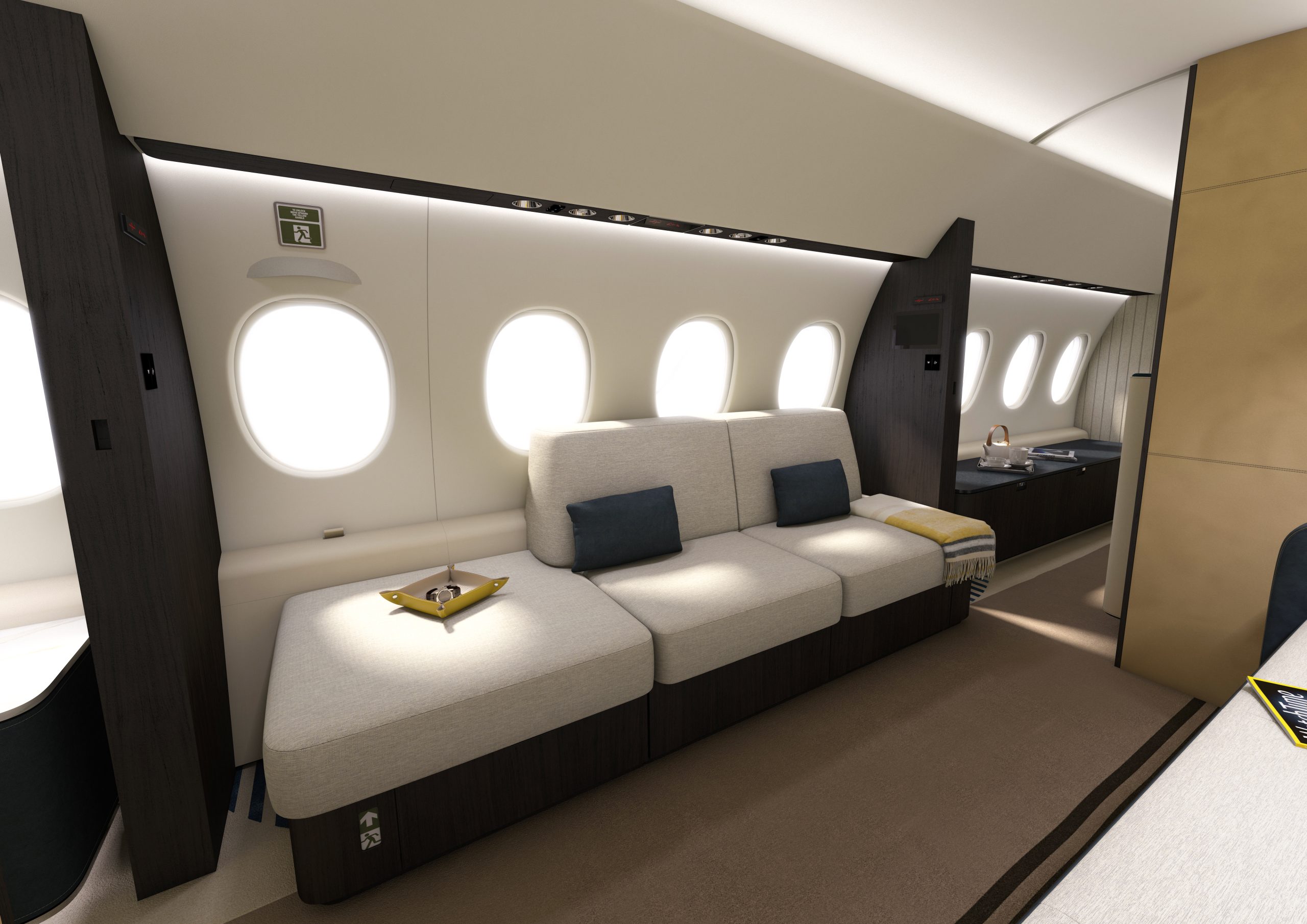
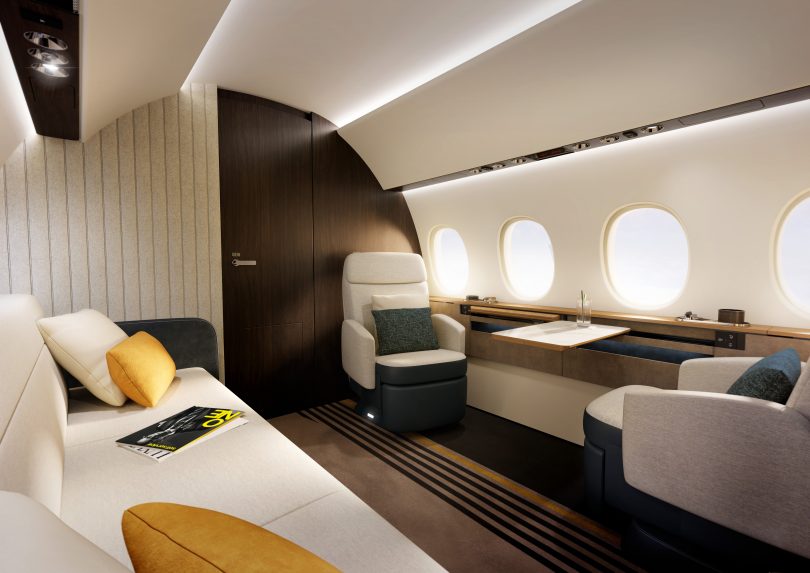
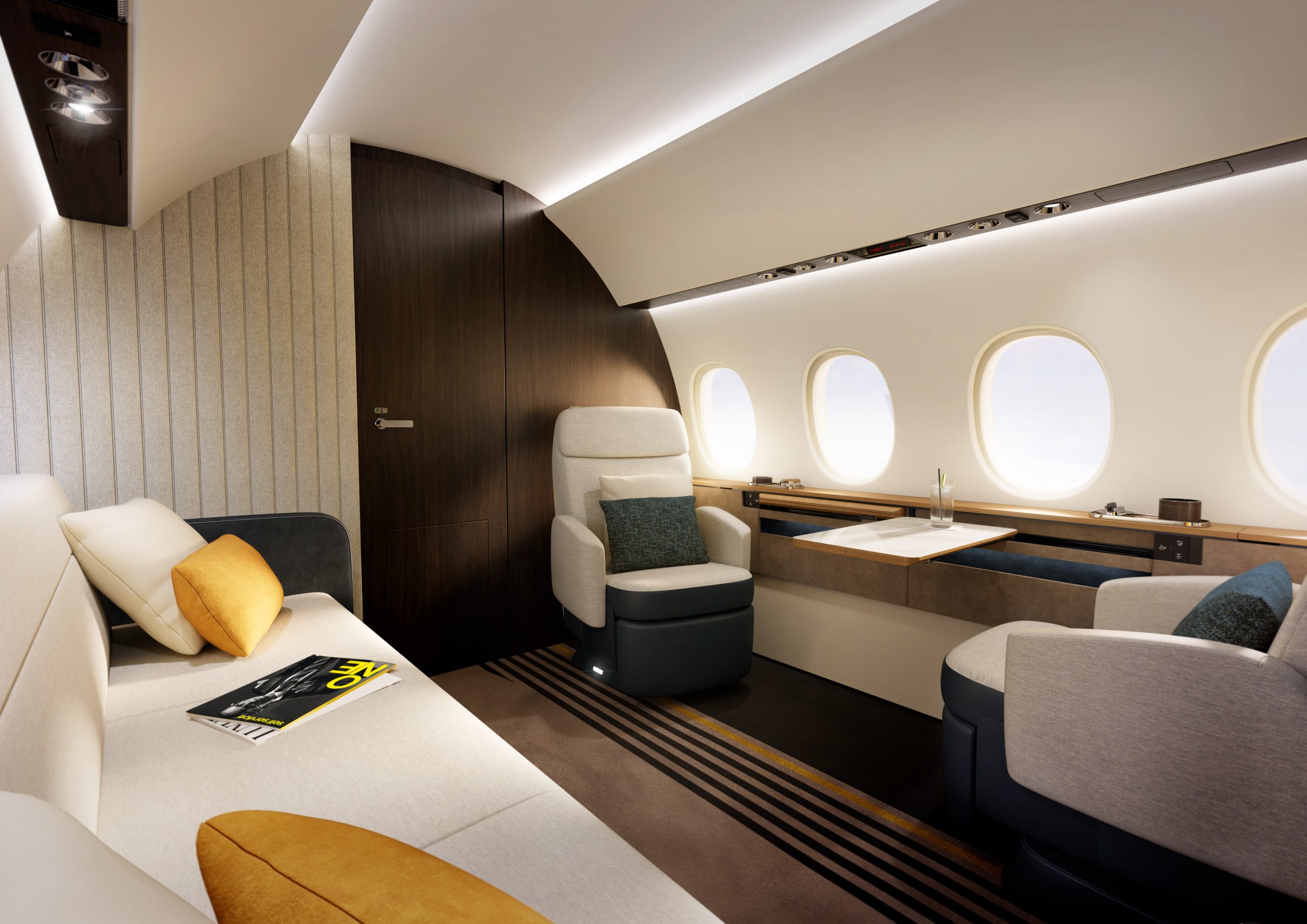
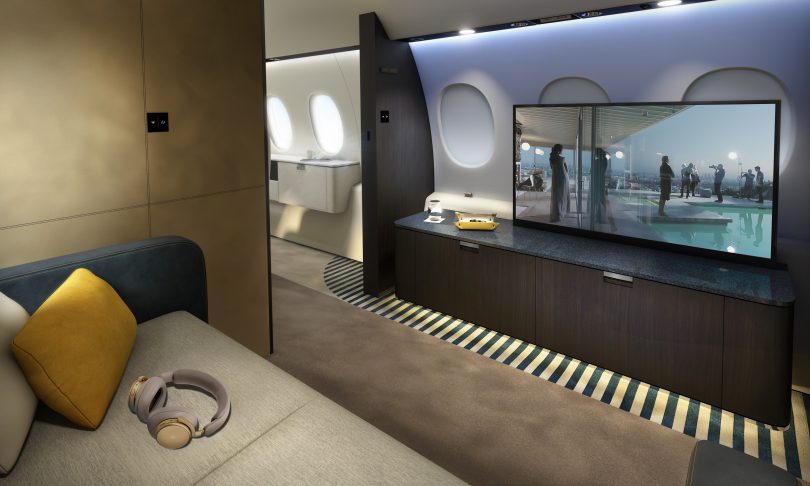
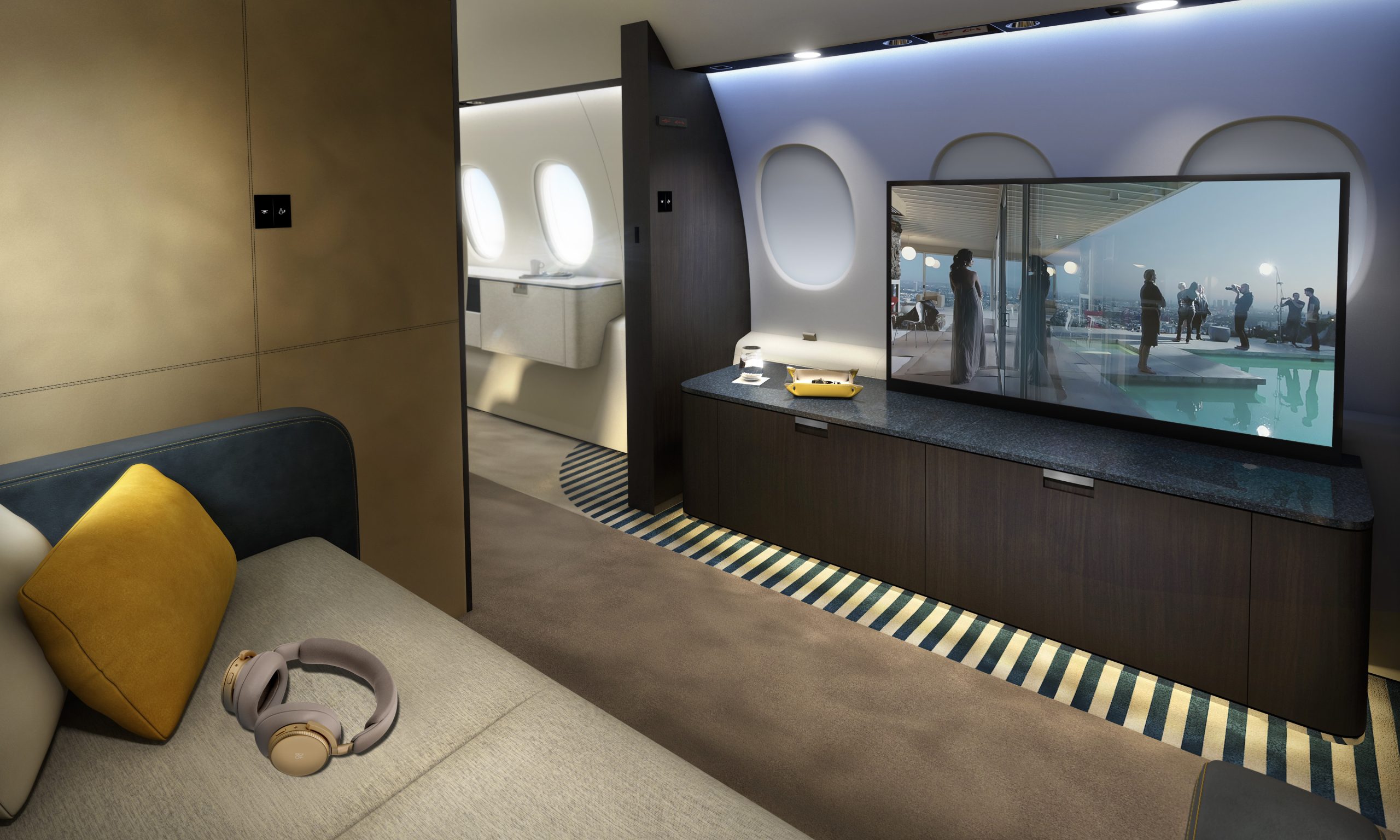
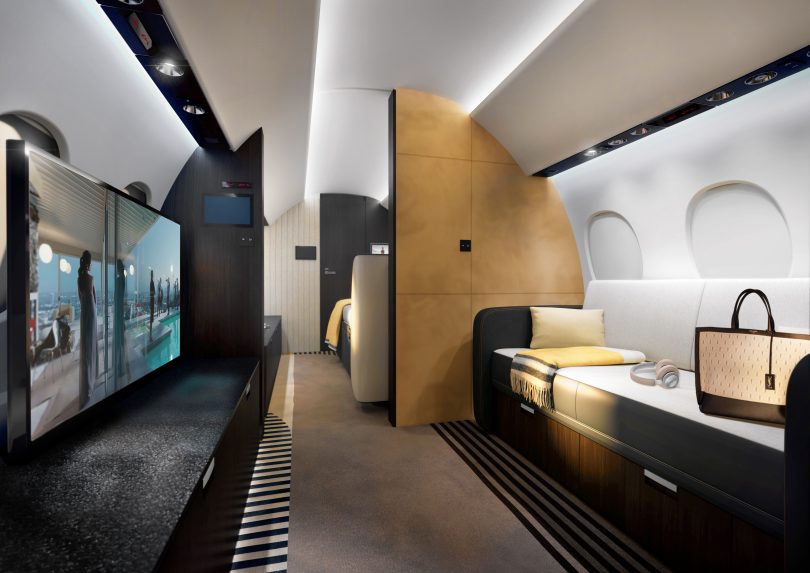
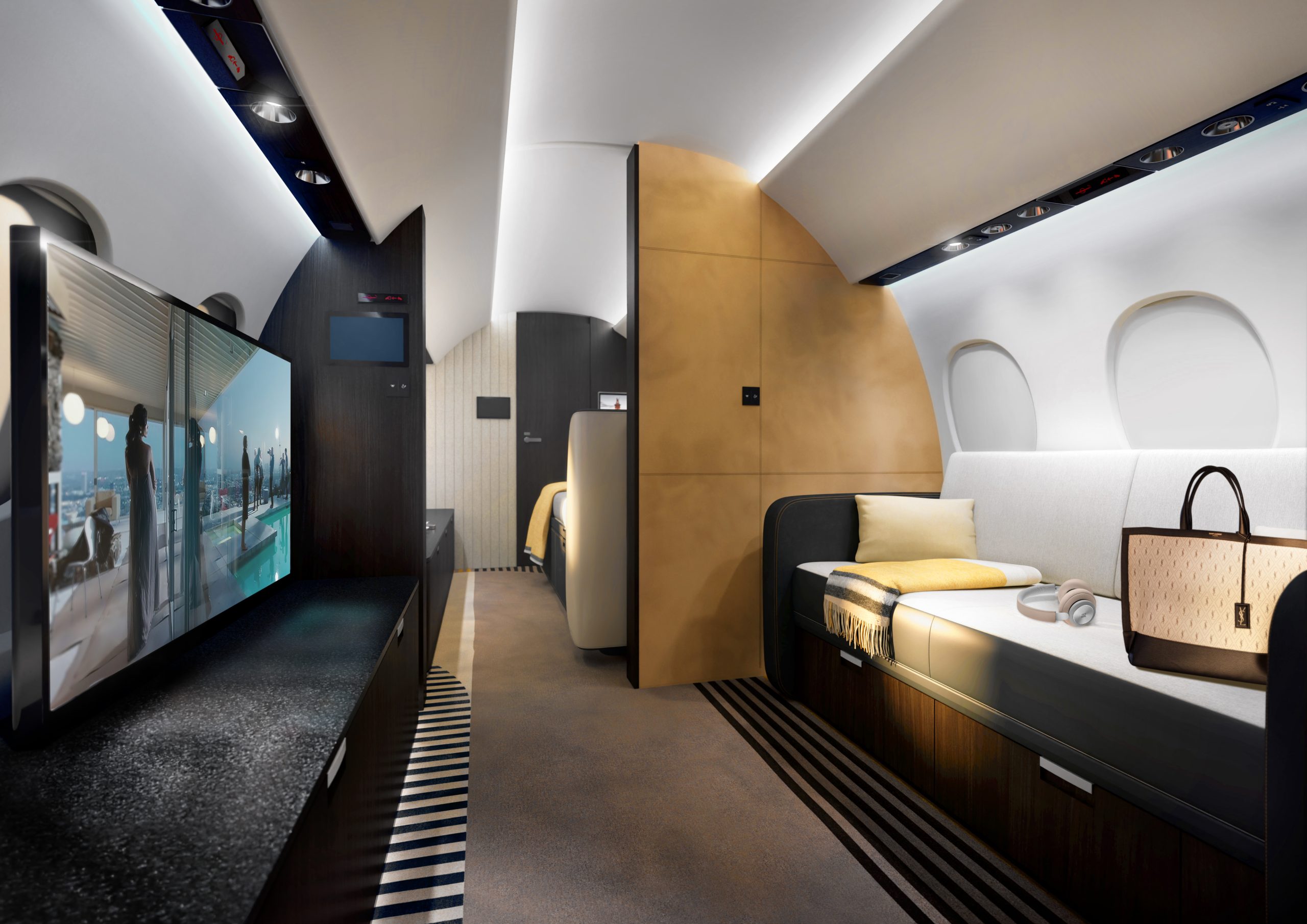
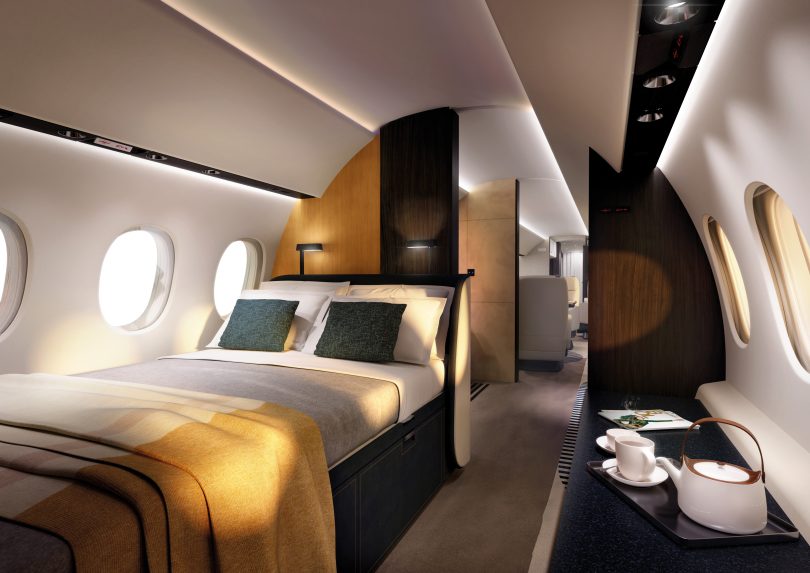
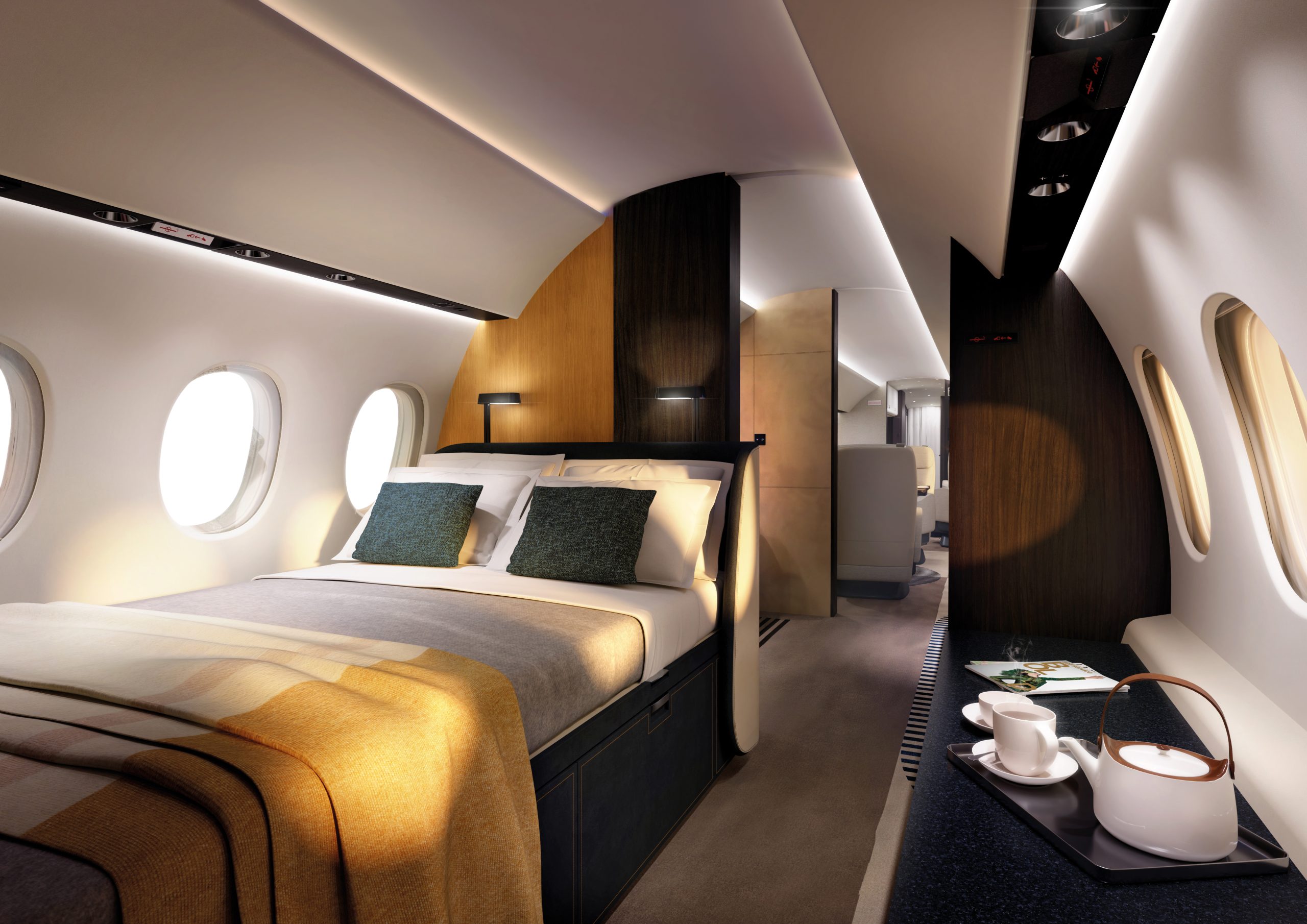
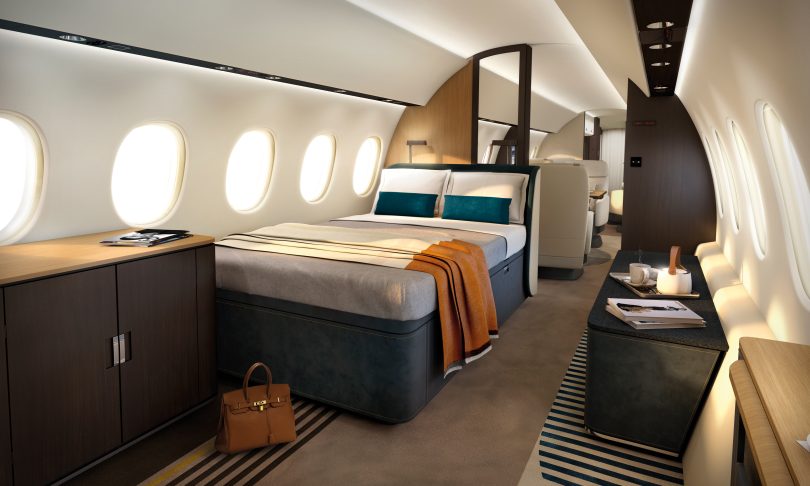
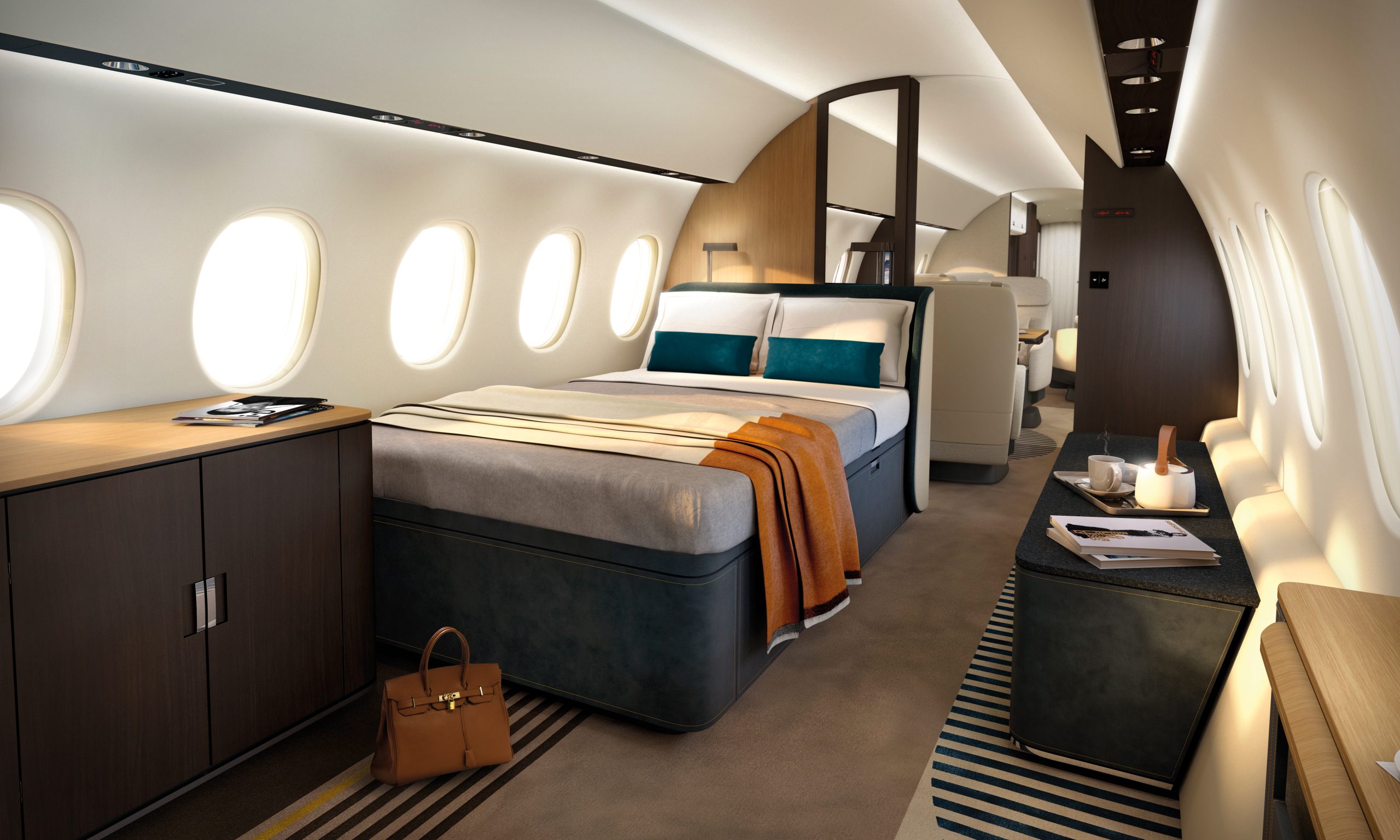
More room, more cabin layouts: The 10X has an ingeniously flexible cabin design, allowing new layout possibilities. Starting with a baseline four-zone platform, the aircraft’s interior design concept centers around an entirely new level of modularity so that the cabin can easily be configured for a wide range of mission capabilities and customer needs.
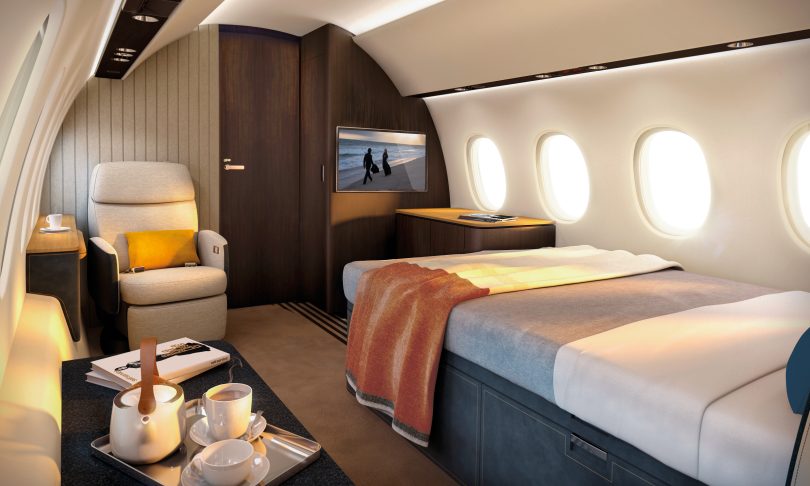
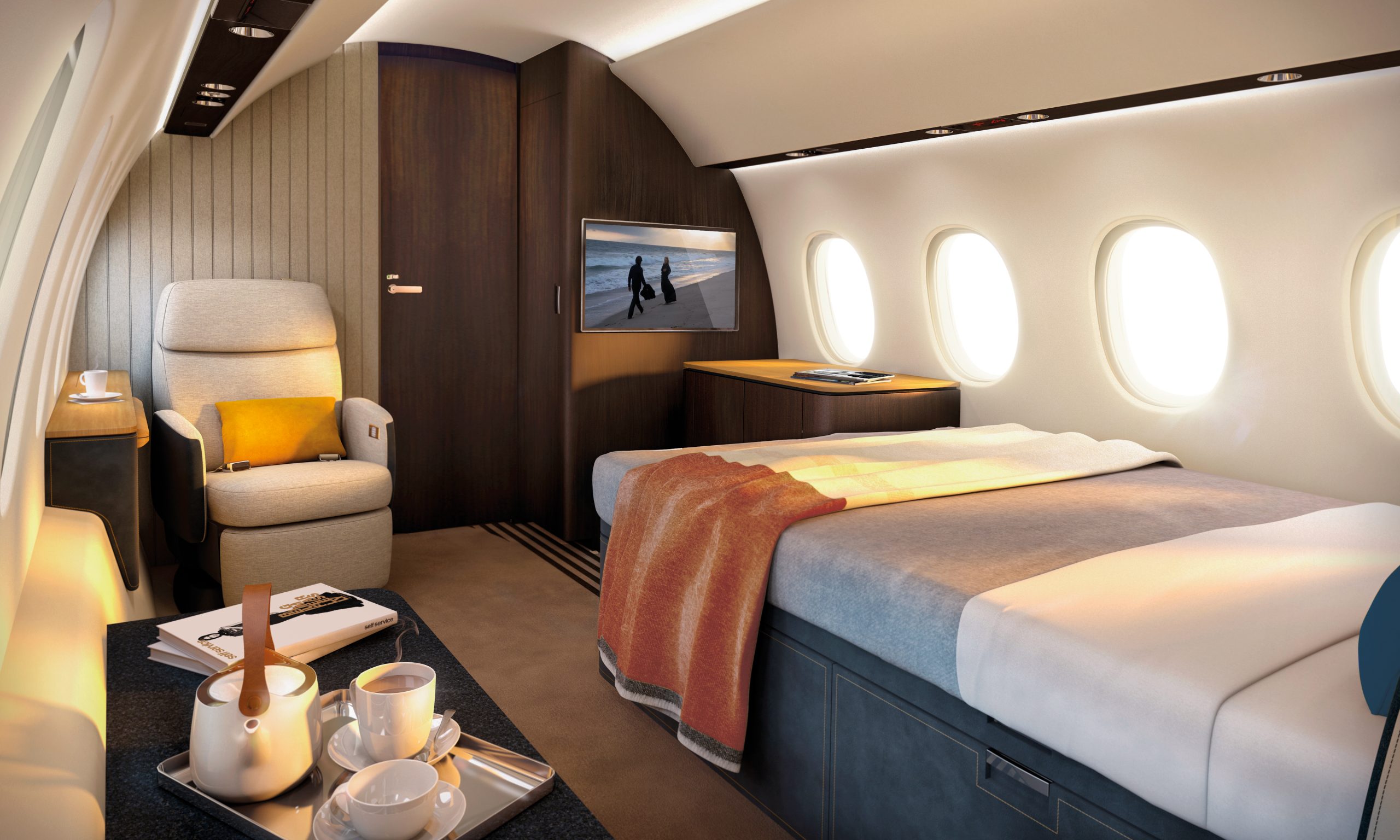
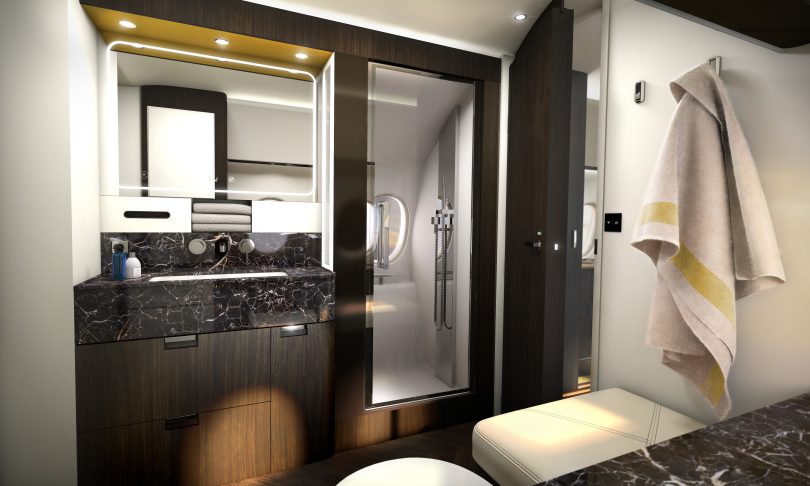
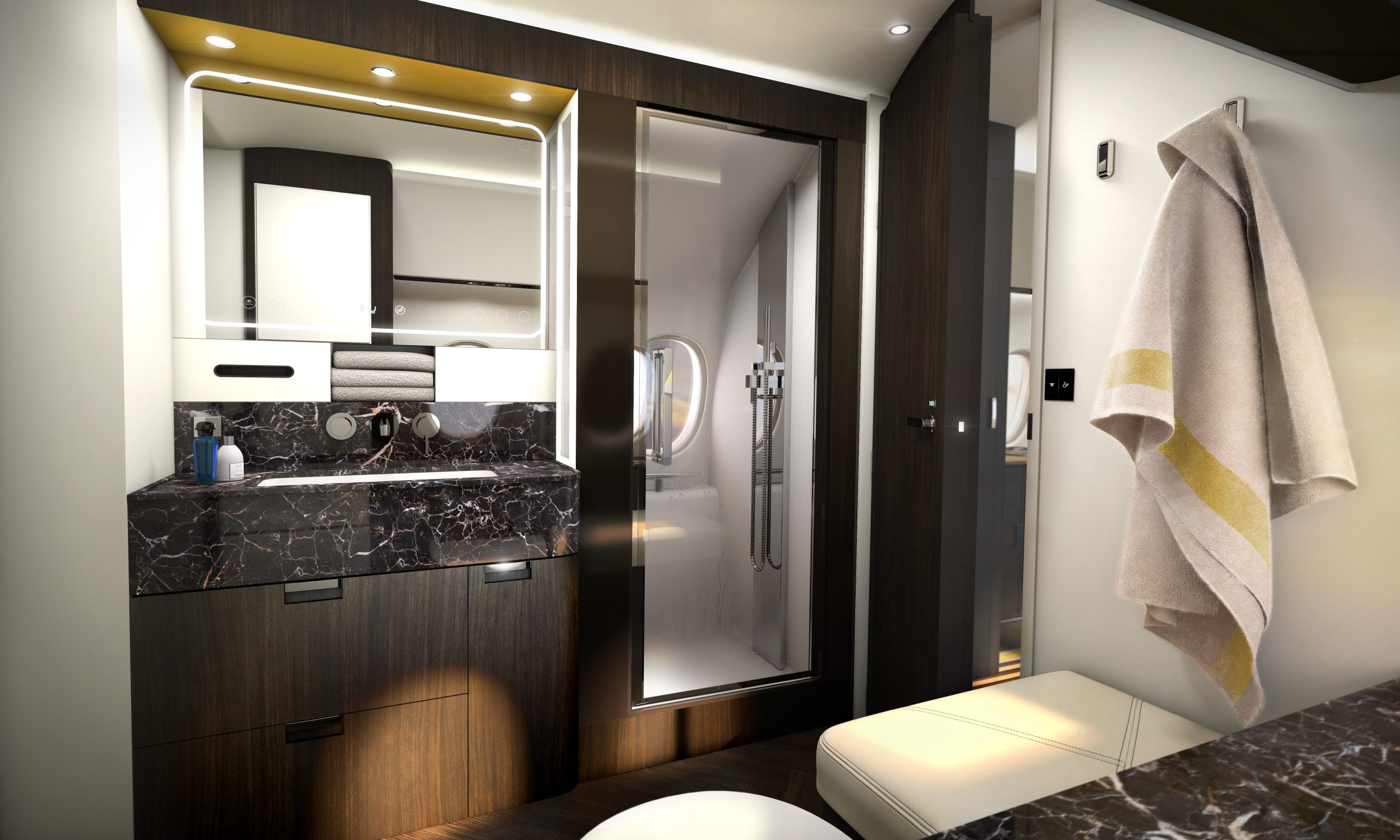
The baseline arrangement separates the interior into four equal sections of 8 feet, 10 inches (2.7 m) with four windows a side each. However, cabin sections can be easily reconfigured into compartments of different lengths and number of windows. Hence, an aft stateroom suite could be 15 feet, 6 inches (4.7 m) long and include seven windows, plus a large lavatory with shower. The 10X stateroom can be equipped with a full-size queen bed—unique in business aviation.
A three-window small compartment could serve as a section for private conversations or as a media center for presentations or the viewing of videos and streaming news on a large screen.
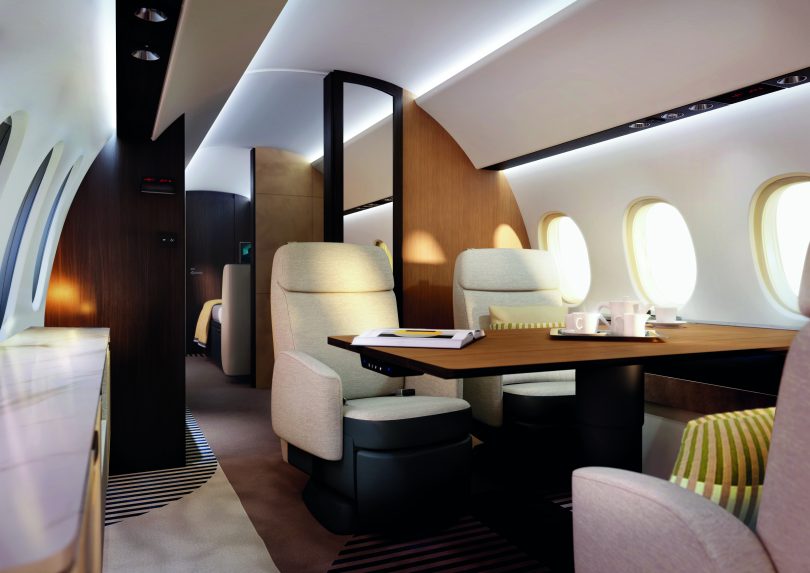
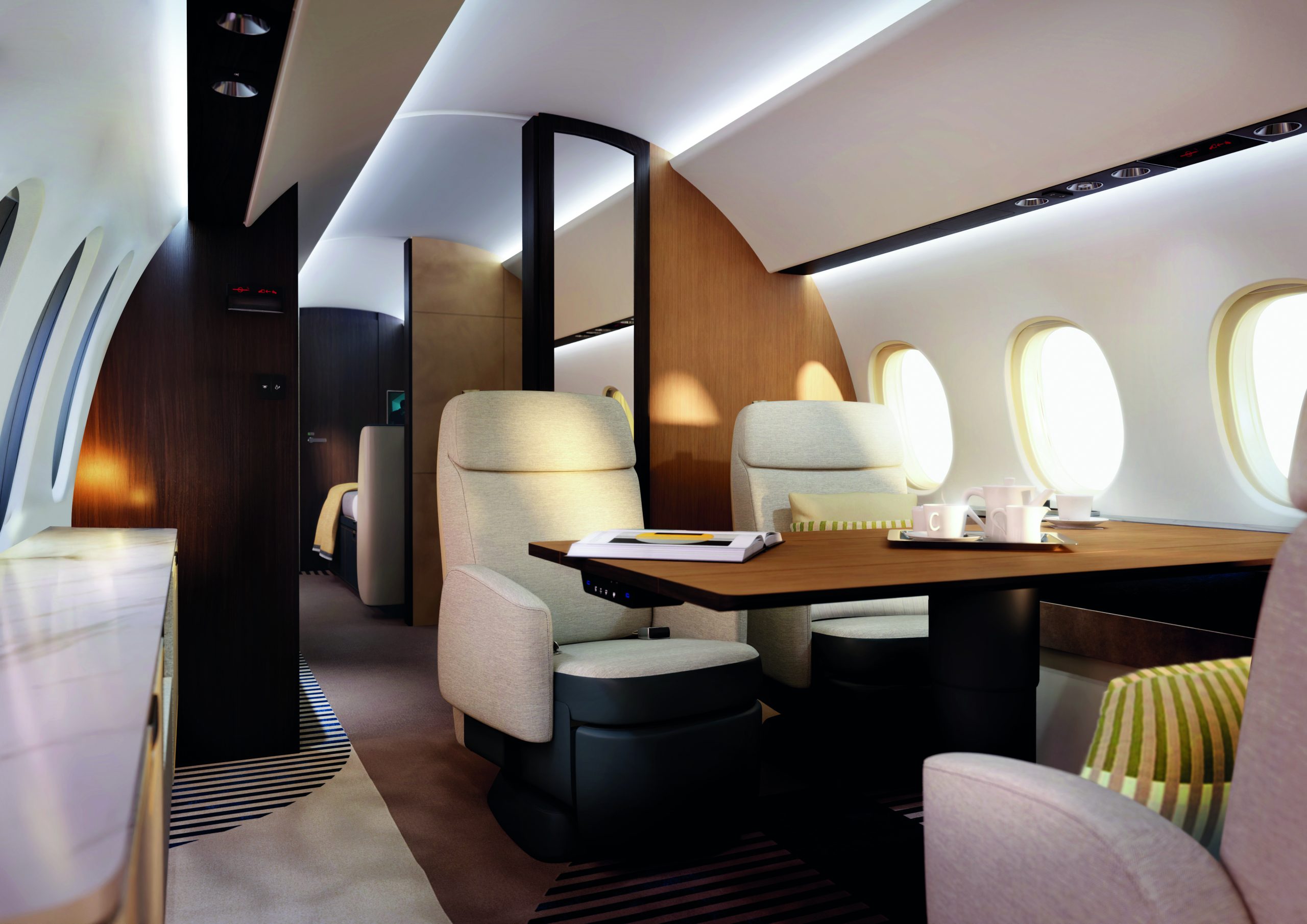
A dining/conference area can have four or more windows a side. When dining at a four-place table, passengers nearest the windows can use the space between seats to step out without inconveniencing the aisle passenger. Overall, movement throughout the cabin is easier and less disruptive.
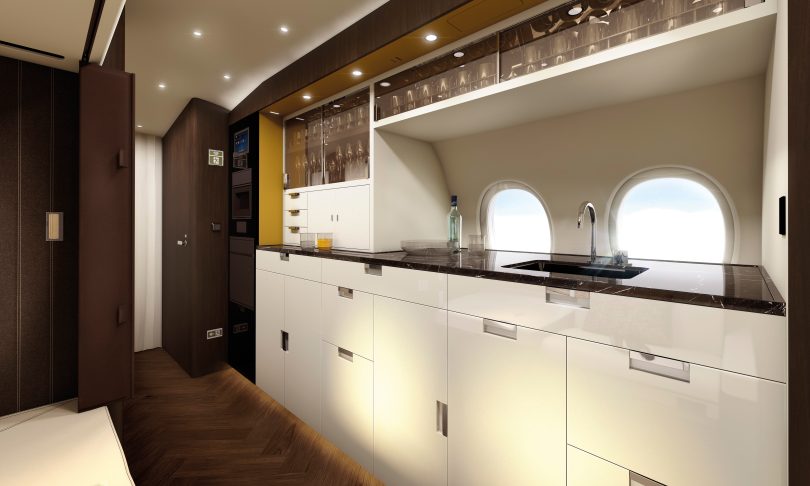
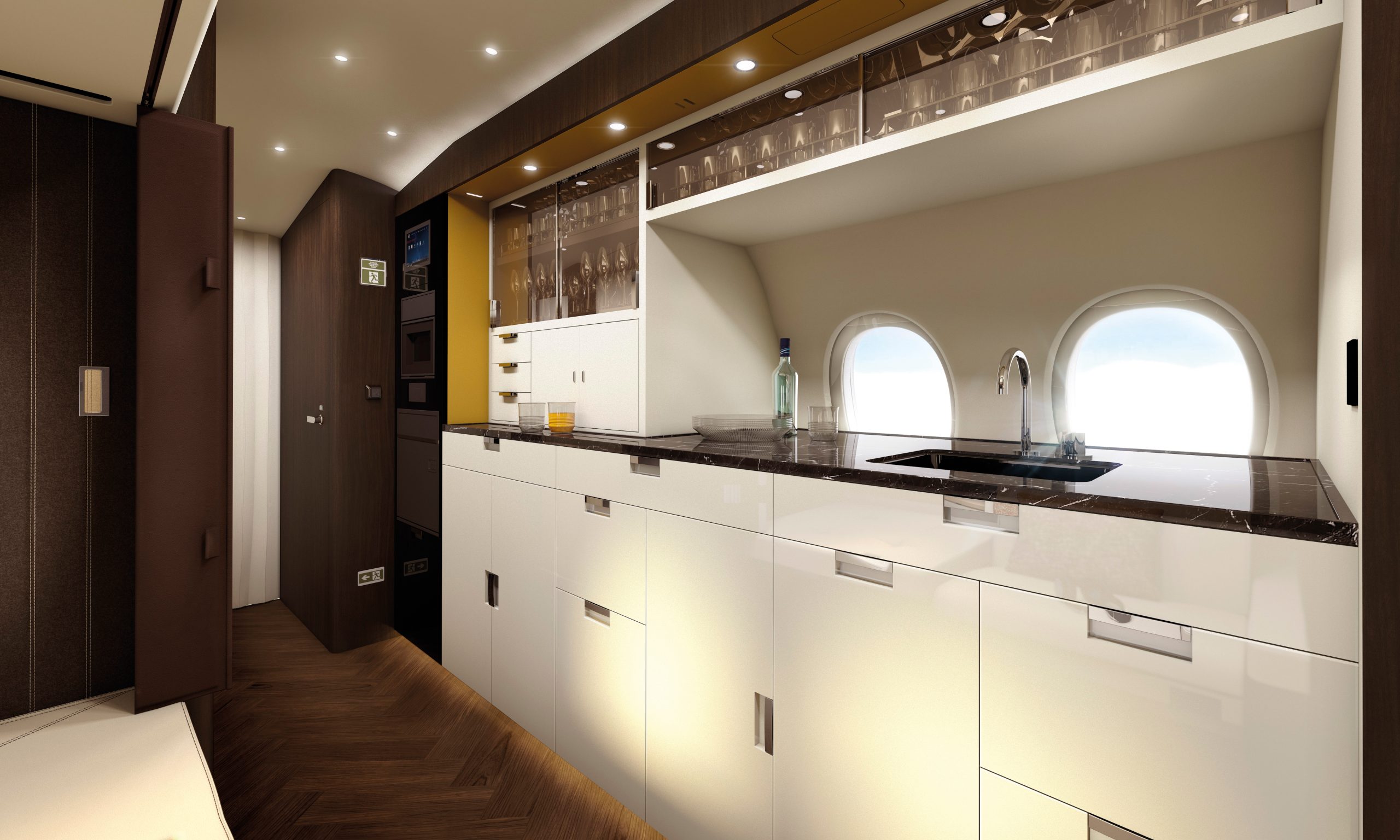
The advantages of more space: The increased cross-section and cabin volume convey a number of advantages, some obvious and some subtle. Ample headroom extends toward the sides of the cabin making it easier to pass people in the aisle and stand up straight even well off the cabin centerline. Seats no longer need to be tucked into side ledges to create sufficient aisle width. A forward lavatory has more space in all dimensions, making it more suitable for passengers, as well as crew. Every galley compartment has more storage volume.
Healthy cabin features: Cabin pressurization is a low 3,000-foot pressure altitude in the cabin while flying at 41,000 feet. A next-generation filtration system eliminates ozone and potential pollutants (volatile organic compounds) and will provide 100 percent pure air. Temperature control will be provided in each of the cabin’s four zones with air entering at the top and the bottom of the cabin for an even temperature throughout.
The lowest sound levels: Dassault’s current flagship, the Falcon 8X and the new Falcon 6X have the lowest interior sound levels of any business jet (below 50 dB SIL), the equivalent of a typical suburban living room. The 10X, using Dassault’s advanced noise reduction technologies, will be at least this quiet despite the increased cruise speed. New laminar-flow aerodynamics around the forward fuselage minimize drag and sound levels in a sometimes hard to quiet area of the interior.
New, larger windows: The 10X’s windows are almost 50 percent larger than those on the 8X. Thirty-eight windows line the fuselage for the most window area and brightest cabin in business aviation.
Always in touch with advanced connectivity:The 10X cabin comes with high-speed connectivity options ensuring seamless in-flight communications and high-speed, streaming access to the internet. These will include low-earth-orbit, low-latency systems such as Starlink and new high-speed connectivity geostationary systems such as Honeywell’s Jetwave-X. The cabin will come equipped with the latest in-flight entertainment and communications network technology designed to distribute crisp, high-definition video and audio content directly to passenger devices or cabin displays. Passengers will have total command of cabin functions in an easy-to-use mobile app or through cabin touchscreens and hard switches.
Lots of baggage space: The 10X’s 198 cubic foot (5.60 m3) baggage compartment is the largest in the ultra long-range segment. Its electrically operated door makes loading and unloading the compartment easier for pilots and ground crews. A dedicated and separated additional compartment provides room for specific devices such as a fly-away kit.
Superior Performance in the Ultre-Long-Range Segment, Classic Falcon Performance from the Most Demanding Airfields
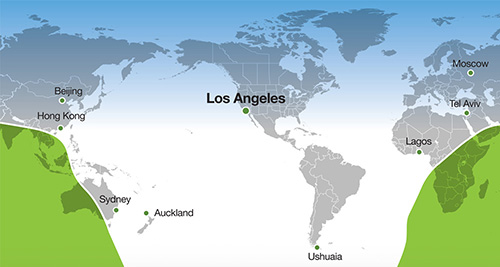
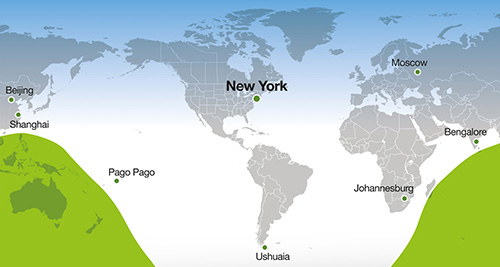
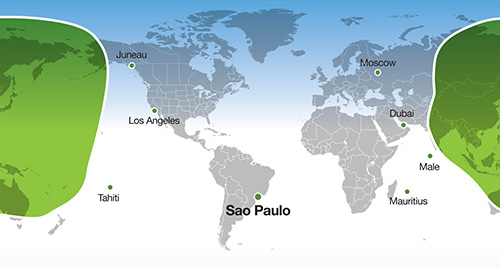
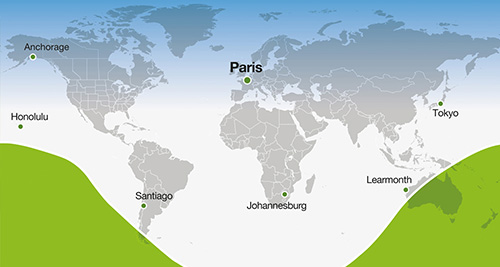
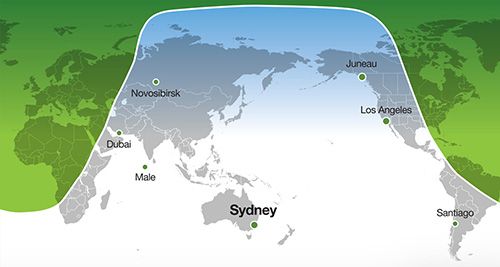
Range is 7,500 nautical miles (13,890 km) at 0.85 Mach, making almost every city pair a nonstop flight. As large as it is, the Falcon 10X can still access typical airports serving business aviation as well as those with challenging approaches. The Falcon 10X is London City capable.
Typical ultra-long-range city pairs:
- New York to Shanghai, Los Angeles to Sydney
- Paris to Santiago
- Hong Kong to New York
Typical city pairs at Mach .90 high-speed cruise:
- New York to Dubai
- Geneva to Singapore
- Hong Kong to San Francisco
A Very Spacious, Advanced Flight Deck
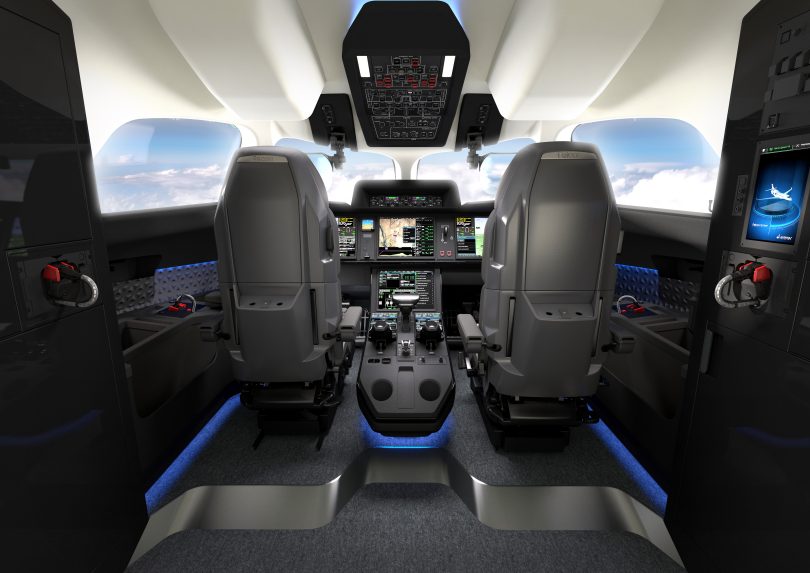
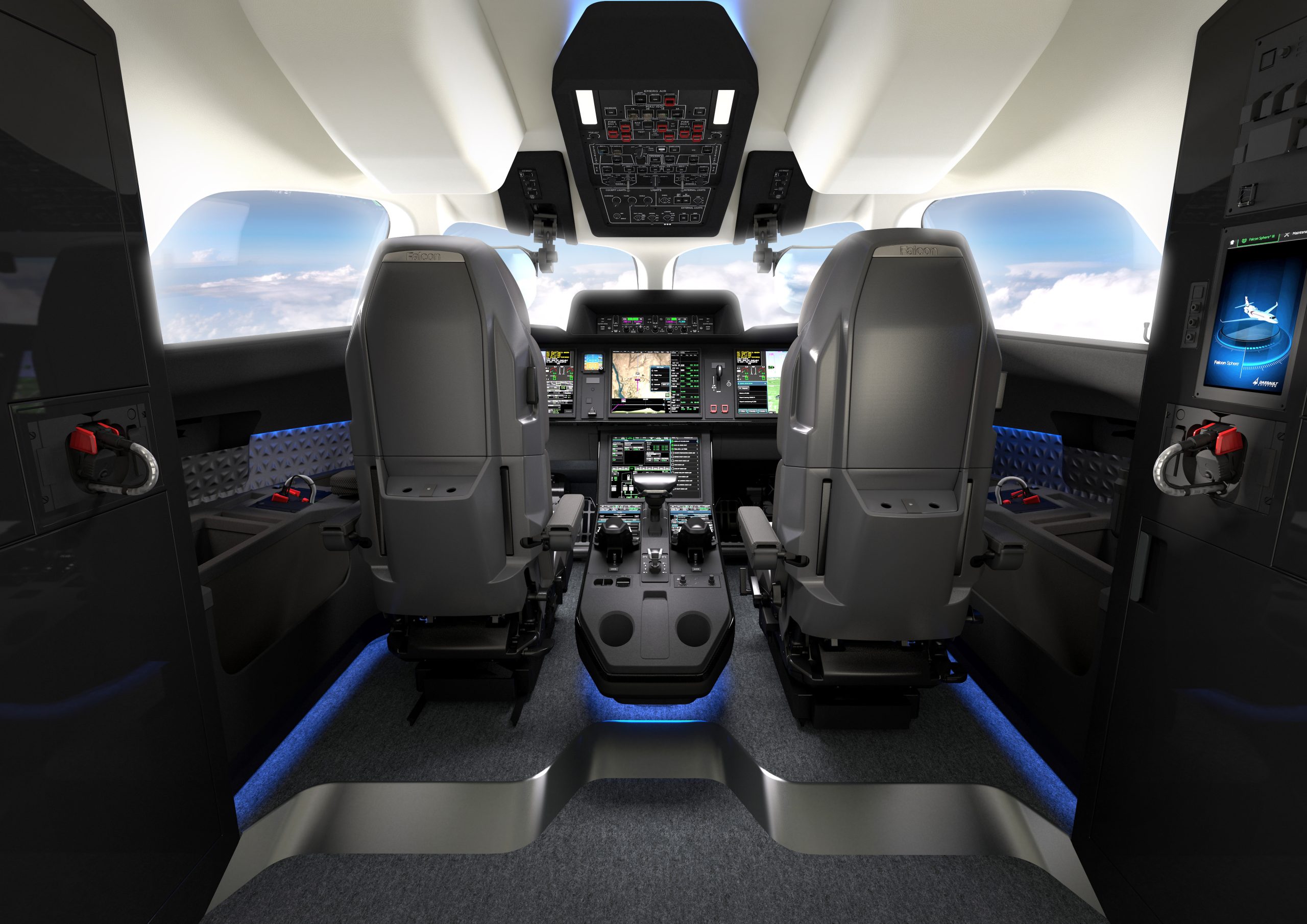
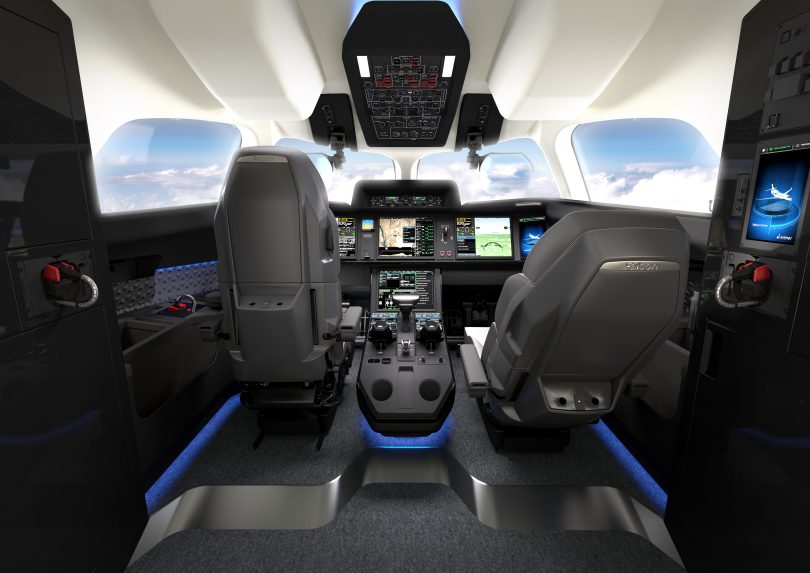
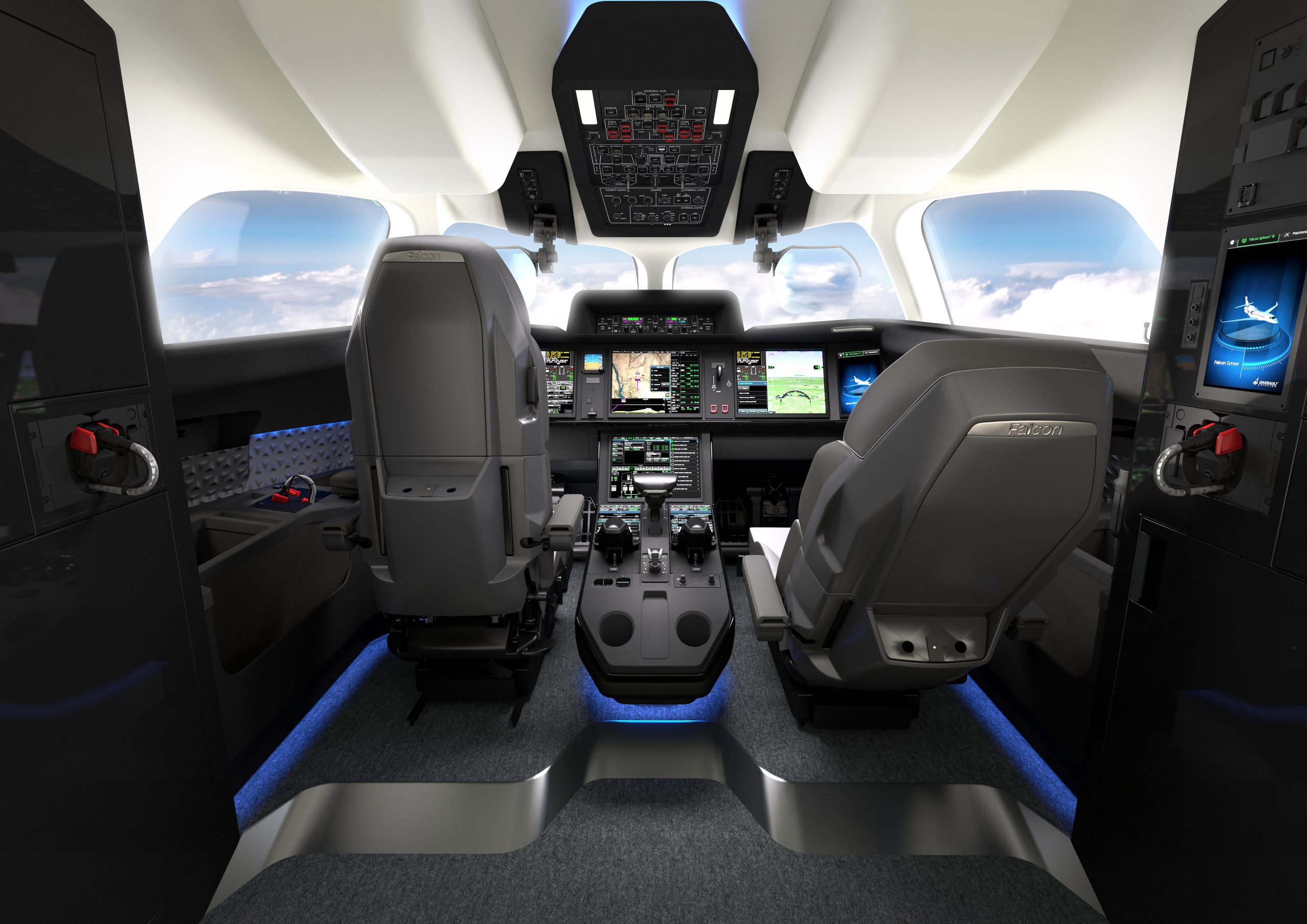
The 10X flight deck takes advantage of a larger fuselage cross-section and extra length and therefore has more space for the flight crew. New levels of automation reduce workload and fatigue over long distances. New digital flight control technology adds breakthrough safeguards.
More space for the flight crew: The flight deck is a roomy space in terms of elbow room and length, a comfortable environment for long-range missions. It has the largest windows in its class including large side windows providing a view of wings to identify ice and wingtip clearance. They are also very helpful in maneuvering flight including circling approaches.
A major advance in flight deck technology: The 10X’s next-generation NeXus flight deck uses touchscreens extensively and a more intuitive interface. It simplifies crew operations and enhances safety through a series of new capabilities, for example: emergency checklists pop up automatically as needed and close out items as pilots follow the indicated actions, streamlining procedures.
The number of flight deck buttons and switches has been reduced, allowing for a smaller, simplified overhead panel. For example, the overhead starting switches are fewer with an automated quick and easy start sequence. Dassault engineers concluded that overhead switches were much easier to use in turbulence and so placed touchscreens where they made the most sense, on main displays. They added a sturdy palm placement with a cursor control device to supplement the touchscreens in turbulence.
Most important, the flight deck adopts true fighter technology through a concept known as HOTAS (Hands-On-Throttle-And-Stick), allowing pilots to fly with eyes out of the flight deck using dual HUD displays with fighter-inspired symbology for quicker, more precise and more intuitive control—for example, using HUD symbology to set power with no need to look down to engine indications in the instrument panel. This new capability, adapted directly from the Rafale fighter, becomes extremely important during the most work intensive hand-flown phases such as night circling maneuvers to a landing. As such, it adds a new level of safety technology.
A next-generation Digital Flight Control System with new safety features: The 10X Digital Flight Control System expands the capability of previous Falcon flight controls. As on the new Falcon 6X, all secondary flight controls (flaps, slats and spoilers) plus nose wheel steering are tied into the digital control system.
Advanced power management: A Smart Throttle is the primary power control, linking the digital power management of both engines. It, too, is derived from the twin-engine Rafale. The Smart Throttle includes spoiler control through integrated rocker switches and a soft go-around mode that is simpler and more automated than in other aircraft. This makes go-arounds more comfortable for passengers, while easing pilot workload at a critical phase.
The Smart Throttle automatically adjusts power on the operating engine and adjusts lateral trim in the event of the loss of one powerplant. These one-engine-inoperative (OEI) features reduce pilot workload and enhance safety from the most critical moment of engine failure at V1 (the speed at which a pilot will takeoff even in the event of a single engine power loss) through landing and reverse thrust so as to easily manage adverse yaw on the runway.
Automatic Recovery Mode: The Smart Throttle is fully integrated with the Digital Flight Control System making possible an Automatic Recovery Mode, yet another fighter innovation. It is the only large business jet to have such a system. Because of this new level of digital integration, the 10X can recover from any unusual attitude, even inverted flight, with the touch of a single recovery button, should pilots become disoriented.
Leadership in enhanced vision: Dassault’s breakthrough FalconEye® combined vision system— the first to offer both enhanced and synthetic vision technologies—with dual head-up displays provides safer approaches, departures and en route flying in all weather conditions. When pilots are properly certified, the system can be used for approaches down to 100 feet, reducing the likelihood of diversions for weather.
Advanced maintenance diagnostics: A new onboard system, FalconScan, first adopted on the Falcon 6X, sets a new standard in real-time system self-diagnosis. Connecting directly to all aircraft systems, FalconScan monitors more than 100,000 parameters (compared to hundreds in earlier Falcons), providing near instantaneous visibility for on-ground maintenance teams. Patented algorithms enable fault detection and troubleshooting for individual aircraft plus trend monitoring across the Falcon10X fleet worldwide.
New Structures, New Aerodynamics, Ultra-Efficient Power
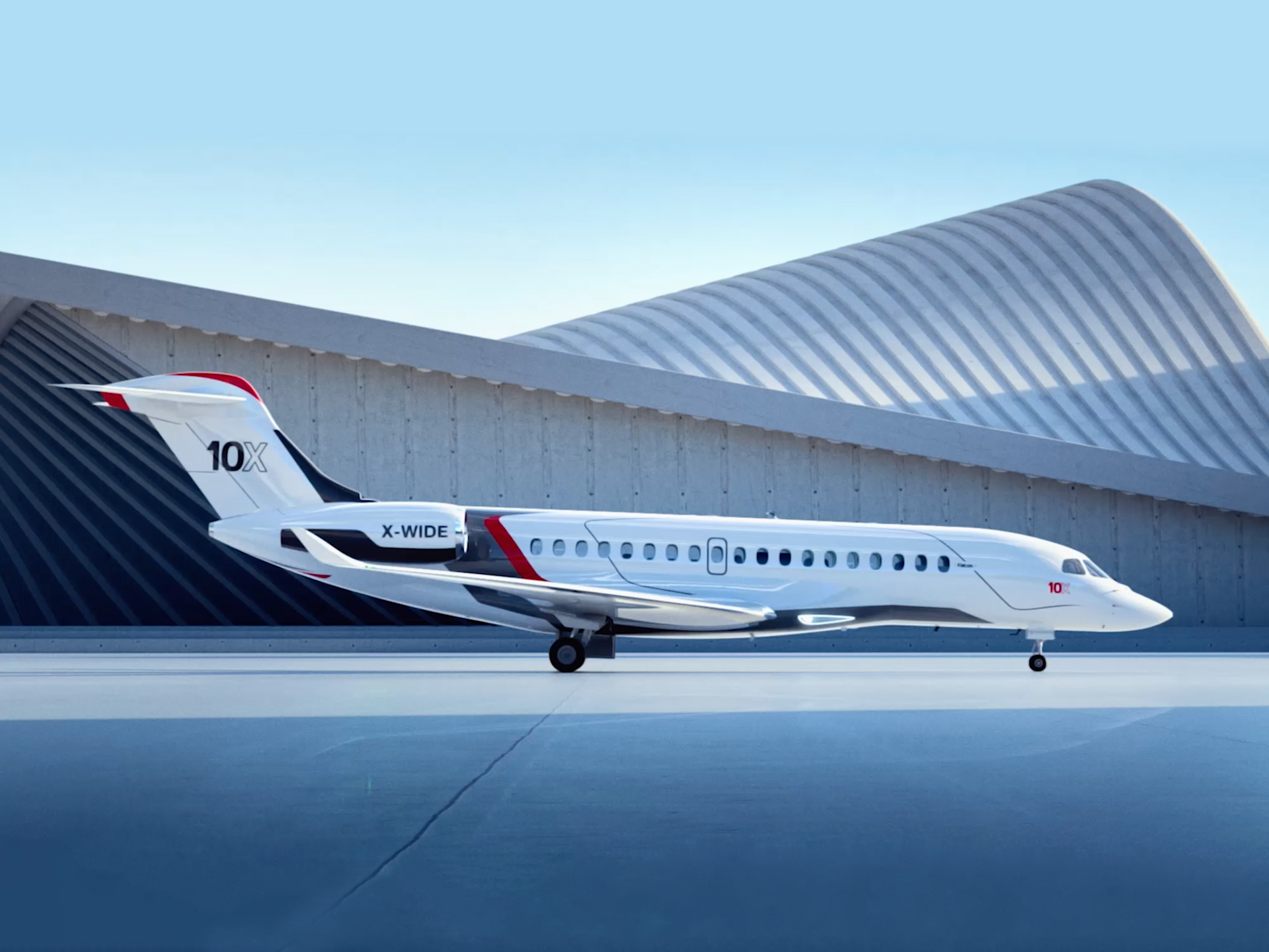
New fuselage: The aluminum fuselage design is entirely new with a circular cross section and frame spacing to permit extra-large windows. Even with a larger fuselage, the aircraft is highly efficient within the ultra long-range segment due to an aero-optimized airframe with all-new wing design and efficient engine configuration. The forward fuselage is aero-optimized for laminar flow, thanks to a new nose shape and tailoring of the area just above flight deck windows, which on other aircraft is typically a higher source of drag.
Design studies were made of composite and metal fuselages, and the metal fuselage was determined to be no heavier than a composite fuselage when considering the latest construction techniques and airworthiness requirements for lightning protection and electronic component hardening. Carbon fiber fuselage construction did not provide tangible benefits for operators.
Special attention was devoted to the optimization of wing to fuselage fairings because of the large size of the fuselage. The composite fairings have finely tailored area ruling, the so-called coke bottle effect (a novel design for fairings in a commercial jet of any type). The fairing contributes to low-drag properties.
The aft fuselage differs from previous Falcons with its T-tail, another drag-reducing decision, as the typical cruciform Falcon tail design performed less well at the desired high-Mach cruise speeds of the 10X. Similarly, a twin-engine design proved more efficient at high Mach numbers than the trijet designs that has served other Falcons so well at slightly lower Mach speeds. Extensive area ruling is also found in the engine to fuselage intersection area to minimize drag.
New, high-speed wing: After studying both metal and composite wings for the 10X, the composite wing was the clear winner for multiple reasons. The wing saves approximately 900 pounds in weight, thus helping reduce weight in other areas such as the landing gear, as well as thrust requirements. The wing is thinner and more aerodynamically optimized than would be possible with a metal wing. It has a higher aspect ratio compared to other long-range jets, leading to lower induced drag. It has higher sweep: 33.7 degrees versus about 30 degrees in the 8X. While retaining the flexibility to dampen turbulence, it’s also stiffer than a metal wing so that it maintains its aerodynamic properties under varying flight conditions. This light but stiff construction also helps avoid flutter—a dangerous type of vibration at high speed. The 10X wing was tested to ultimate stress loads prior to first flight.
Above all, it’s the extreme efficiency of the 10X wing which makes the larger cabin with its higher “wetted area” (the total surface area of the fuselage) possible. A metal wing would have necessitated a “me too” cabin configuration similar in size to competitive offerings.
To construct the 10X wings, Dassault built a dedicated composite wing center of excellence in Anglet, France with the latest composite construction technologies, including robotics. While the composite techniques and materials are new, the company has been building supersonic composite wings for decades for the Rafale fighter.
The 10X wing, with four slats, six spoilers, and two flaps per side (all integrated into the Digital Flight Control System) retains Dassault’s tradition of superior low-speed maneuverability and performance. These high-lift systems allow access to shorter runways with confidence. When retracted, the wing reshapes to a high-speed configuration with high fuel efficiency.
A Cleaner, Leaner, Smarter Engine
The 10X’s Rolls-Royce Pearl® 10X is the industry’s most advanced business jet engine. It’s the latest, largest and most powerful of the Pearl engine series, delivering more than 18,000 pounds of thrust. In testing, the Pearl 10X has been run on 100 percent Sustainable Aviation Fuel and the Falcon 10X will be certified for 100 percent SAF operation.
The Pearl 10X incorporates multiple innovations derived from Rolls-Royce’s Advance2 technology demonstrator programs, including new materials and internal aerodynamics for more efficient combustion, longer life and lower maintenance. It is equipped with a new blisk fan for greater efficiency, an innovative combustor for lower emissions and an advanced high-pressure turbine for longer life.
The Pearl engine family is part of the Rolls-Royce Intelligent Engine vision for longer service life and lower maintenance. It has a revolutionary Engine Health Monitoring System that adds advanced vibration detection to thousands of other parameters. It’s a user-friendly diagnostic system that keeps maintenance managers better informed of engine condition, delivering exceptional levels of availability and reliability.
The engine is fully supported by Rolls-Royce’s industry-leading, CorporateCare® Enhanced engine service program.
Unique Falcon Safety Features
Built-in, military-level safety features
Falcons are built alongside Dassault’s renowned Rafale fighters and meet the same high manufacturing standards, protecting, for example, the fly-by-wire system and fuel tanks from potential damage. All critical systems are meticulously segregated, and the fuel tanks are pressurized. Quality measures like these go far beyond minimum regulatory requirements and are unmatched in the industry.
Falcon 10X Specifications
Performance
- Maximum range: 7,500 nm (13,890 km) at Mach .85 (8 pax, 4 crew, ISA, SL, Zero Wind, NBAA IFR Reserves)
- Maximum Mach Operating (MMO) speed: Mach .925
- Maximum Certified Altitude: 51,000 ft (15,545 m)
- Balanced Field Length (MTOW, SL, ISA) : < 6,000 feet (1,829 m)
- Landing Distance (SL, Public Transport) : < 2,500 ft (762 m)
Engines & Avionics
- 2 Rolls-Royce Pearl 10X Engines
- Maximum Thrust: 18,000+ lbs
- Next Generation Flight Deck with NeXus
External Dimensions
- Wing Span: 110 ft 3 in (33.6 m)
- Length: 109 ft 7 in (33.4 m)
- Height: 27 ft 7 in (8.4 m)
Internal Dimensions
- Cabin Height: 6 ft 8 in (2.03 m)
- Cabin Width: 9 ft 1 in (2.77 m)
- Cabin Length (excluding flight deck and baggage): 53 ft 10 in (16.4 m)
- Cabin Volume: 2,780 ft3 (78.7 m3)
- Baggage Volume: 198 ft3 (5.60 m3)
Weights/Capacities
- Maximum Ramp Weight: 115,400 lbs (52,345 kg)
- Maximum Takeoff Weight: 115,000 lbs (52,163 kg)
- Maximum Zero Fuel Weight: 67,800 lbs (30,754 kg)
- Maximum Fuel Weight: 51,700 lbs (23,451 kg)